

Freight shipping times from China depend mainly on the transport mode (sea, air, rail, courier), the origin and destination, and the time of year. As a simple rule of thumb: sea freight from China to the USA or Europe usually takes 25–45 days door-to-door, air freight 5–15 days, express couriers 3–7 days, and rail freight to Europe around 20–30 days. On top of this, you must also add production time, port and customs handling, and buffer for delays during peak seasons like Chinese New Year and Q4 (September–December).
When planning imports, many buyers look only at “shipping time from China”. In reality, you need to plan for total lead time, not just transit.
Key definitions:
- Transit time: Time your cargo is physically moving between ports/airports/depots (e.g. Shanghai port to Los Angeles port).
- Door-to-door time: Transit time plus origin handling, loading, customs, and last-mile delivery.
- Total lead time: Production time plus door-to-door time, including any waiting days, documentation, and delays.
For realistic planning, always think:
Production time + Origin handling + Transit time + Destination handling + Last mile + Buffer = What you should promise to your customers.
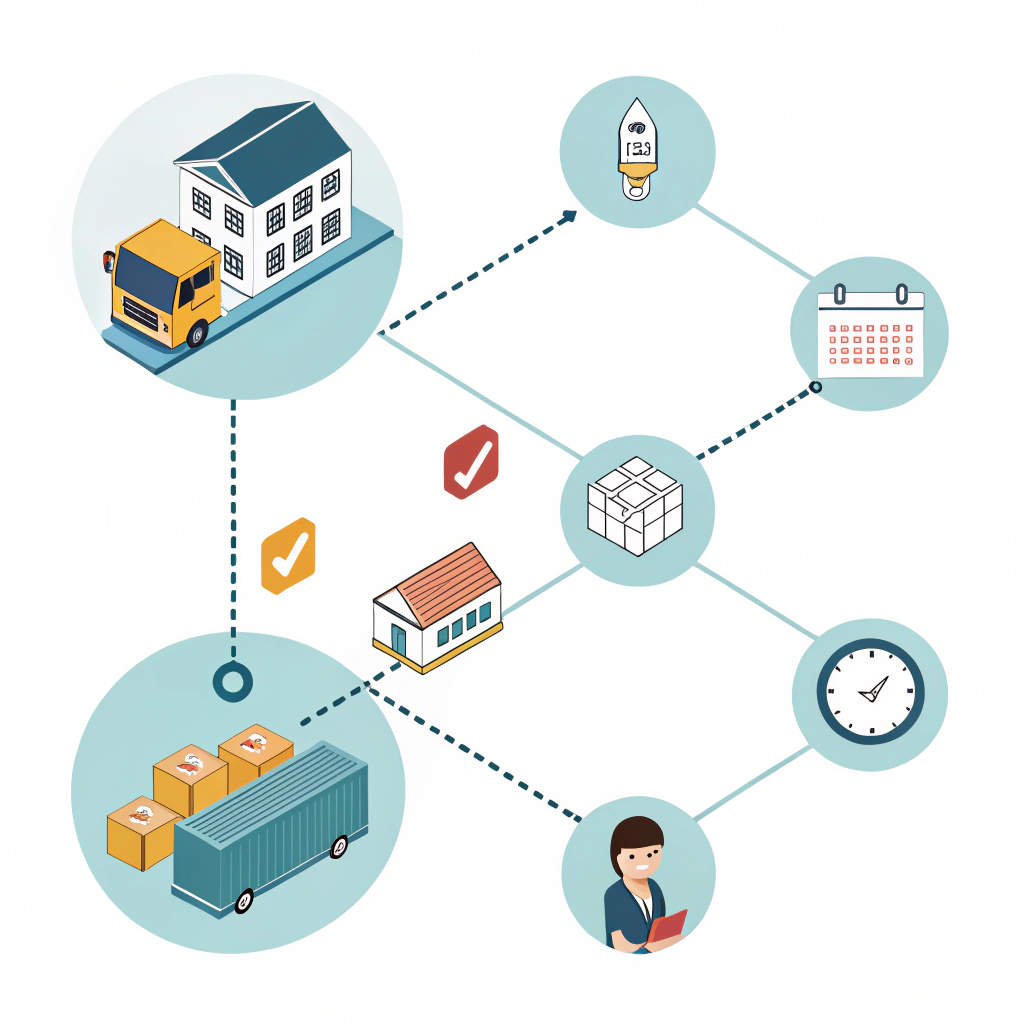
The ranges below are realistic for most bulk commercial shipments under normal conditions (no extreme port congestion or major disruptions).
Sea freight is the most common mode for volume shipments because of cost, not speed.
Port-to-port transit times from major Chinese ports (e.g. Shenzhen, Shanghai, Ningbo):
| Destination Region | Example Route | Port-to-Port Transit | Typical Door-to-Door Range* |
|---|---|---|---|
| USA West Coast | Shanghai → Los Angeles / Long Beach | 13–20 days | 25–35 days |
| USA East Coast (via Panama/Suez) | Shenzhen → New York | 28–40 days | 35–50 days |
| Canada (West Coast) | Shanghai → Vancouver | 14–20 days | 25–35 days |
| Northern Europe | Ningbo → Rotterdam / Hamburg | 28–35 days | 35–50 days |
| UK | Shenzhen → Felixstowe / Southampton | 30–38 days | 38–55 days |
| Mediterranean (EU) | Shanghai → Barcelona / Genoa | 25–32 days | 32–45 days |
| Australia (East Coast) | Shanghai → Sydney / Melbourne | 12–20 days | 20–30 days |
| Middle East | Ningbo → Dubai | 15–22 days | 25–35 days |
| South America (East Coast) | Shenzhen → Santos | 35–45 days | 45–60 days |
*Door-to-door assumes typical customs and trucking times, no severe congestion.
FCL vs LCL shipping time
-
FCL (Full Container Load):
- Faster at origin/destination: less consolidation/deconsolidation.
- More direct routes available.
- Door-to-door is often 3–7 days faster than LCL on the same route.
-
LCL (Less than Container Load):
- Extra time for consolidation1 at origin and deconsolidation at destination.
- Typically adds 5–10 days to the journey.
- More handling points = higher risk of delay.
What to plan for sea freight
For most importers:
- China → USA West Coast: Plan 4–6 weeks door-to-door.
- China → USA East Coast / Europe: Plan 6–8 weeks door-to-door.
- Add more buffer during peak seasons (see Section 4).
Air freight is much faster than sea and ideal for urgent shipments or high-value goods.
Airport-to-airport transit times (major routes):
| Route | Airport-to-Airport Transit | Typical Door-to-Door Range |
|---|---|---|
| China → USA (e.g. PVG → LAX/JFK) | 1–4 days | 5–10 days |
| China → Canada | 1–4 days | 5–10 days |
| China → Europe (e.g. PVG → FRA/LHR) | 1–3 days | 4–9 days |
| China → Australia | 1–3 days | 4–8 days |
| China → Middle East | 1–3 days | 4–8 days |
Door-to-door air freight must include:
- Export handling & customs at origin: 1–3 days
- Flight schedules + possible transshipment: 1–4 days
- Import customs & local delivery: 2–4 days
What to plan for air freight
- Most B2B door-to-door air freight: 5–12 days total.
- Add extra 2–3 days if:
- During peak season (space tight).
- Dangerous goods or special cargo needing extra checks.
- New supplier with slower documentation.
For small parcels and samples, express couriers are door-to-door services with integrated customs clearance.
Typical timelines:
| Region | Common Range (Door-to-Door) |
|---|---|
| USA & Canada | 3–7 days |
| Europe (EU & UK) | 3–7 days |
| Australia & NZ | 3–7 days |
| Middle East | 3–7 days |
| Southeast Asia | 2–5 days |
| South America | 5–10 days |
| Africa | 5–10+ days |
Courier times depend on:
- Service level (priority vs economy).
- Remote vs major city delivery.
- Customs clearance complexity (e.g. missing invoices, HS codes2).
For business planning, assume 3–7 days for most major markets, a bit more for remote regions.
Rail freight from China to Europe (often called China–Europe Railway Express) is a middle option between sea and air in terms of speed and cost.
Common routes: Chinese hubs (e.g. Chongqing, Xi’an, Zhengzhou) to European hubs (e.g. Duisburg, Hamburg, Warsaw).
Typical rail times:
| Leg | Transit Time |
|---|---|
| Terminal-to-terminal | ~15–20 days |
| Door-to-door to EU city | ~20–30 days |
Rail is attractive when:
- Sea freight is too slow.
- Air freight is too expensive.
- Goods need more predictable timing through inland Europe.
Many importers underestimate the “silent days” before and after the actual transit. These can easily add 2–3 weeks if not managed.
Key steps and their typical time:
| Step | Typical Duration |
|---|---|
| Production completed → cargo ready | Depends on supplier |
| Booking space with forwarder | 1–3 days |
| Trucking to port/airport | 1–3 days (domestic China) |
| Terminal/warehouse handling | 1–3 days |
| Export customs clearance | 0.5–2 days |
| Total origin handling | 3–8 days in many cases |
During peak season or when there’s a documentation issue, this can stretch to 10–14 days.
Once your cargo reaches the destination port/airport:
| Step | Typical Duration |
|---|---|
| Vessel/plane arrival & unloading | 1–3 days |
| Import customs clearance | 1–5 days (if documents ok) |
| Port/airport storage & handling | 1–3 days |
| Domestic trucking to your warehouse | 1–5 days |
| Total destination handling | 4–12 days in many cases |
Complex cargo, inspections, or new importers (without established profiles) may face additional days.
Customs clearance is a common source of uncertainty.
- If documents are correct and duties are paid promptly:
- 2–3 days is common for both air and sea.
- Delays happen due to:
- Inconsistent commercial invoice values.
- Wrong or missing HS codes.
- Missing certificates (e.g. for food, cosmetics, electronics).
- Random inspection.
Always coordinate with your freight forwarder3 in advance about needed documents and classification to avoid preventable delays.
Knowing the calendar is as important as knowing transit times.
The following periods commonly bring higher rates, less space, and slower schedules:
-
Chinese New Year (CNY):
- Factories close 1–2 weeks; workforce disruption can last 4–6 weeks.
- Bookings before CNY are extremely tight.
- Production must finish 3–5 weeks before the holiday to ship on time.
- Shipping and trucking after CNY gradually recover over 2–3 weeks.
-
Golden Week (Early October):
- National holiday in China; reduced port and factory activity.
- Expect 1–2 weeks of disruption around the date.
-
Q4 & Pre-Christmas (Sept–Dec):
- Global demand peaking; retail season.
- Sea and air capacity tight; transit may have:
- Rolled shipments (containers left behind).
- Longer port queues.
- Add 1–2 weeks buffer to usual estimates.
-
Back-to-School / Summer:
- Depending on your sector, July–September can also see higher demand.
Besides seasonal demand, consider:
- Port congestion: Backlogs at major hubs can add 3–14 days.
- Weather events: Typhoons in Asia, storms at sea, snow in Europe/US.
- Blank sailings: Carriers cancel services to control capacity, forcing later departures.
- Equipment shortages: Lack of empty containers at certain depots.
- Documentation issues: Wrong paperwork can hold cargo until corrected.
- Inland bottlenecks: Trucking shortages or road restrictions at origin/destination.
For business planning, always assume at least some variability around the “normal” transit time you see on route maps.
Incoterms4 define who is responsible for which parts of the transport, not the physical speed of a ship or plane. However, your choice does affect your control and predictability of shipping time.
- Supplier delivers goods onto the ship at the Chinese port.
- Buyer (you) controls:
- Freight forwarder selection.
- Shipping schedule and carrier.
- Routing and consolidation.
Impact on time:
- More transparency on schedules.
- Easier to coordinate multiple suppliers into one shipment.
- Generally more predictable once you work with a reliable forwarder.
- Supplier arranges the main carriage to your destination port.
- Looks convenient, but:
- You usually have less control over scheduling.
- Supplier may choose slower or cheaper service to save cost.
- Destination charges may be higher and less transparent.
Impact on time:
- Transit time can be similar in theory, but:
- More risk of slow routing or uncommunicated delays.
- Harder to integrate with your broader supply chain planning.
Practical takeaway: Incoterms don’t change pure transit time, but FOB generally gives you more control over your door-to-door timing and better coordination with your forwarder.
Selecting between sea, air, rail, and courier is a balance of speed, cost, and cash flow.
| Mode | Typical Door-to-Door Time | Best For | Main Trade-Off |
|---|---|---|---|
| Sea Freight | 4–8 weeks | Bulk, low–medium value, non-urgent goods | Slow but cheapest |
| Rail (to EU) | 3–4 weeks | Medium value, faster than sea to Europe | Limited geography |
| Air Freight | 5–15 days | High value, urgent, smaller shipments | High cost |
| Express Courier | 3–7 days | Samples, small parcels, e‑commerce orders | Highest cost per kg |
- Use sea freight for:
- Main replenishment cycles.
- Stable products with predictable demand.
- Use air freight or rail for:
- New product launches with firm deadlines.
- Emergency top-up orders to avoid stockout.
- Use express for:
- Product samples.
- Spare parts and urgent small orders.
Many importers mix modes:
- First small batch by air to launch quickly.
- Main bulk order by sea to protect margin.
- Occasional express for urgent replacement or marketing samples.
To avoid stockouts and unhappy customers, build a conservative, repeatable lead time model.
For a mature product from a familiar supplier:
- Production time: 25–35 days (depends on complexity).
- Origin handling & export: 5–7 days.
-
Port-to-port sea transit:
- To USA West Coast: 15–20 days.
- To USA East Coast / Europe: 28–35 days.
- Destination handling & trucking: 7–10 days.
-
Buffer for variances:
- Normal season: 7–10 days.
- Peak season: 14–21 days.
Resulting planning baseline (door-to-door + production):
- China → USA West Coast:
- Normal: 7–9 weeks total.
- Peak season: 8–11 weeks.
- China → USA East Coast / Europe:
- Normal: 8–10 weeks total.
- Peak season: 9–12 weeks.
- Production time: 20–30 days.
- Origin handling & export: 2–4 days.
- Flight + transshipment: 1–4 days.
- Destination handling & trucking: 2–4 days.
- Buffer: 2–3 days (more in peak season).
Resulting planning baseline:
- Most air shipments: 4–6 weeks total including production.
- In pure logistics terms (goods ready to warehouse):
- 7–12 days in normal conditions.
- 10–15 days in peak season.
-
Align production and shipping early:
- Confirm ETD (Estimated Time of Departure) and ETA (Estimated Time of Arrival) with your forwarder as soon as you know the Cargo Ready Date (CRD)5.
-
Lock in bookings early in peak season:
- For sea: 2–3 weeks before departure.
- For air: 1–2 weeks before departure.
-
Prepare documents in advance:
- Commercial invoice, packing list, HS codes, certificates.
- Avoid last-minute corrections that hold shipments.
-
Track shipments proactively:
- Use tracking from your forwarder or carrier.
- React early if you see port congestion or flight/vessel delays.
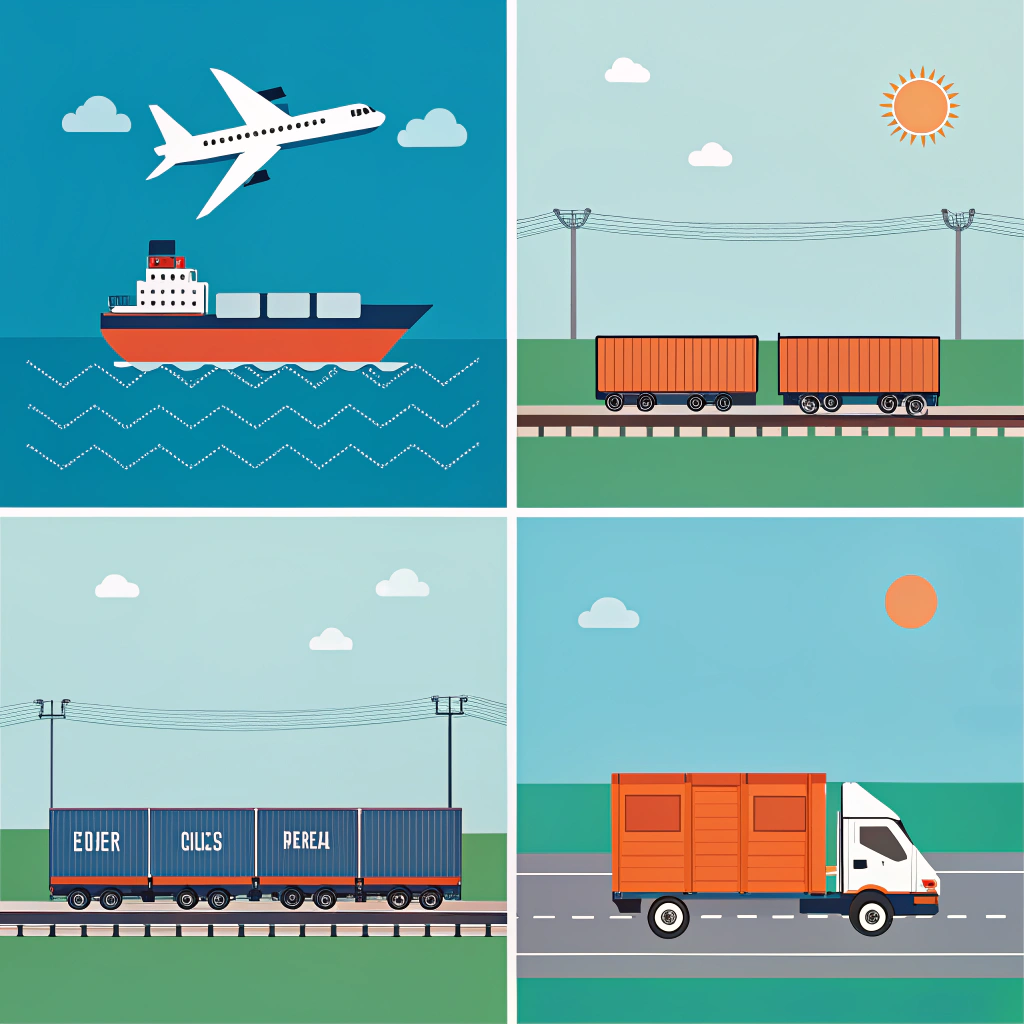
A container ship from a major Chinese port to the USA typically takes about 13–20 days to reach the West Coast (for example, Shanghai to Los Angeles or Long Beach). To the East Coast, transit is longer, usually 28–40 days, because vessels sail via the Panama Canal, Suez Canal, or a combination of routes. When you include origin handling, customs, and inland trucking, most importers should plan for 4–6 weeks door-to-door to the West Coast and 6–8 weeks to the East Coast in normal conditions.
The total delivery time from China depends on the transport mode and whether you count door-to-door or only port-to-port:
- Sea freight: around 3–4 weeks port-to-port, but usually 6–8 weeks door-to-door once you include loading, customs, and inland delivery.
- Air freight: about 3–8 days airport-to-airport, and typically 6–16 days door-to-door depending on handling and customs.
- Rail freight to Europe: roughly 18 days terminal-to-terminal, and around 20–25 days door-to-door.
For realistic planning, always add a buffer for seasonal peaks and possible customs delays.
-
Consolidation: Reading the article helps you understand how combining multiple small shipments into one container can cut costs, affect handling time, and reduce or increase transit risks in your supply chain. ↩
-
HS codes: Reading the article gives you clarity on how tariff classification works, how to find the correct code, and how proper coding impacts duties, compliance, and customs clearance speed. ↩
-
Freight forwarder: Reading the article shows you what a forwarder actually does, how to choose one, and how they can optimize routes, costs, and lead times for your international shipments. ↩
-
Incoterms: Reading the article helps you decode each term’s cost and risk split, so you can negotiate better contracts and avoid hidden logistics and liability surprises. ↩
-
Cargo Ready Date (CRD): Reading the article explains how to define, agree, and use CRD in planning so that production, booking, and shipping schedules are aligned and delays are minimized. ↩