

China’s manufacturing dominance stems from its unparalleled economies of scale1, cost efficiencies, abundant labor resources, and strong government support, making it the ideal hub for global assembly and production.
China’s rise as the world’s manufacturing center is not accidental; it is the result of decades of strategic planning, economic reforms, and infrastructural investments. In this article, we dive deep into the historical trends, economic factors, and industry-specific reasons that have led to China’s manufacturing supremacy. We analyze the key drivers behind this trend and provide insights for supply chain optimization and strategic sourcing2 decisions, especially for B2B professionals focused on cost efficiency and global production.
China’s transformation began in the late 1970s when economic reforms were implemented to modernize the economy. The shift from a centrally planned system to a more market-driven economy laid the foundation for massive foreign investments and rapid industrial growth. Some notable historical milestones include:
- Economic Liberalization3: Policies introduced in the late 20th century attracted multinational companies seeking cost-effective labor and production outputs.
- Export-Led Growth: The focus on boosting exports turned China into the factory of the world, vastly increasing its presence in global markets.
- Infrastructure Investment: Massive investments in transportation, energy, and technology created a robust supply chain network that can support high-volume production.
These reforms enabled China to build a comprehensive industrial ecosystem that supports everything from raw material processing to final assembly, creating a seamless production experience for international businesses.
Multiple factors have contributed to why most products are made or assembled in China. Below, we explore these factors in detail:
China’s massive scale of production plays a significant role in driving down unit costs. When production volumes are high, fixed costs are spread over millions of units, reducing the per-unit cost. This remains a key competitive advantage over manufacturers in other countries.
- Mass Production Capabilities: Chinese factories are built to handle large orders, meeting both domestic and international demand.
- Efficiency in Operations: Integration of advanced production techniques and automation further minimizes costs while maintaining competitive pricing.
Cost efficiency remains one of the most compelling reasons for sourcing production in China.
- Abundant Low-Cost Labor: With a large population and historically lower wage levels relative to developed economies, Chinese industries can offer competitive pricing.
- Skill Development: Over decades, investments have been made in workforce training, ensuring that even low-cost labor is highly skilled in modern manufacturing techniques.
While labor costs have been rising in recent years, the overall cost structure — including the myriad of manufacturing support services — still outweighs the benefits offered by many Western economies.
China’s supply chain integration is unmatched globally. The proximity of suppliers, manufacturers, and logistics companies within industrial zones reduces lead times and transportation costs.
- Vertical Integration5: Many factories are part of clusters where every step from component production to final assembly is located nearby, reducing coordination complexity.
- Specialized Industrial Parks: These parks are designed to offer complementary services such as quality control, testing, and packaging, further speeding up production.
The efficiency of these integrated systems creates significant advantages for companies relying on rapid turnaround times and tight production schedules.
State support has been critical in shaping China’s manufacturing landscape. Government policies often provide incentives for technological upgrades, infrastructure development, and export facilitation.
- Subsidies and Tax Breaks: Numerous policies help reduce production costs and lower barriers for international trade.
- Focus on Innovation: Recent reforms emphasize shifting from low-cost manufacturing to more technologically advanced production, ensuring long-term competitiveness.
To further clarify the benefits associated with manufacturing in China, consider the following table consolidating the key factors:
| Key Factor | Description | Competitive Advantage |
|---|---|---|
| Economies of Scale | High production volume reduces unit costs | Lower cost per unit |
| Labor Advantages | Access to abundant skilled, low-cost labor | Competitive pricing and flexibility |
| Integrated Supply Chain | Close proximity of suppliers and manufacturers | Reduced lead times and lower logistics costs |
| Government Support | Incentives, subsidies, and policies for industrial growth | Enhanced investment protection and innovation |
| Infrastructure | Advanced transportation and industrial parks | Streamlined production and supply chain efficiency |
This table clearly summarizes why international firms often favor Chinese manufacturers over competitors from other regions.
Several case studies showcase how businesses have leveraged China’s manufacturing ecosystem to optimize production costs and improve product quality:
- Electronics Manufacturing: Many global electronics brands have shifted production to China due to its ability to produce high-quality components at scale. The localized supply chain also enables just-in-time manufacturing, reducing inventory overheads.
- Textile and Apparel Industry: China remains a leader in textile production, offering both volume and variety. This sector has benefited from specialized industrial clusters that streamline processes from fabric production to finished garments.
- Automotive Components: Automotive suppliers rely on Chinese factories for parts production. The integrated supply network ensures that major car manufacturers can assemble vehicles swiftly and cost-effectively.
These examples underscore the strategic advantages that China’s manufacturing model offers over traditional manufacturing hubs in developed economies.
China’s role in global manufacturing has far-reaching implications beyond simply reducing costs. It affects supply chain dynamics, international trade policies, and global market strategies.
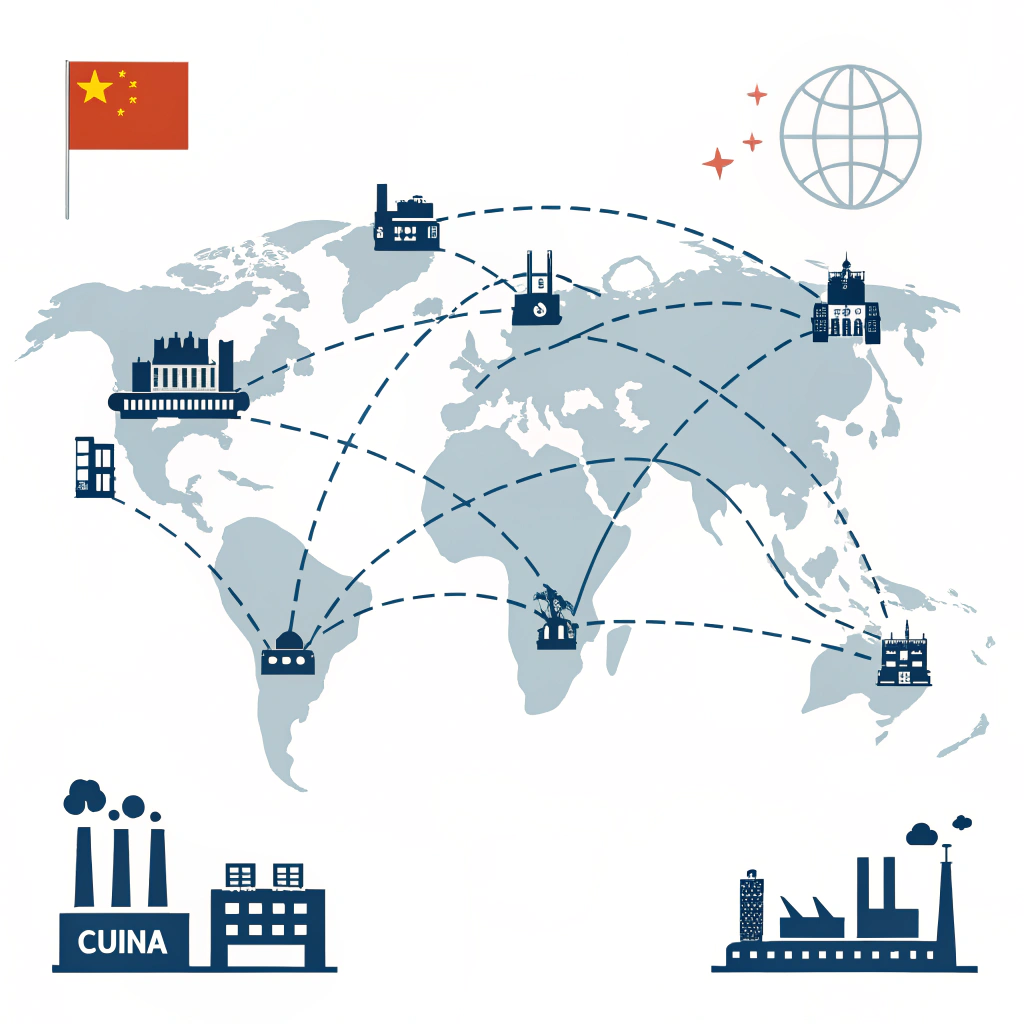
China is uniquely positioned at the crossroads of Asia and Europe, facilitating access to diverse markets. This geographical advantage enhances export capabilities, while consistent improvements in shipping and logistics further bolster its role as a global production center.
Even as rising wages in China remain a challenge, the country is responding by investing in automation and advanced manufacturing techniques. This progression not only sustains its current advantages but also opens the door for higher value-added production, potentially transforming the nature of work in the manufacturing sector.
Geopolitical tensions and evolving trade policies globally do impact sourcing strategies. However, the scale of China’s manufacturing ecosystem and its comprehensive production capabilities mean that many companies continue to see it as an indispensable part of their supply chain.
For business executives and sourcing managers, understanding the structure and drivers behind China’s manufacturing dominance is crucial. Here are some recommendations based on our analysis:
- Leverage Economies of Scale: Assess the volume requirements of your production runs. Implementing an approach that maximizes bulk production can lead to significant cost savings.
- Strengthen Supply Chain Integration: Work closely with sourcing partners to establish lines of communication that ensure timely updates on production cycles and quality controls.
- Monitor Policy Changes: Stay updated on Chinese industrial policies and global trade agreements. This can help anticipate market shifts and adjust sourcing strategies accordingly.
- Invest in Quality Control: Although cost advantages are compelling, ensure that quality control measures are robust to maintain product standards in competitive global markets.
- Plan for Technology Transitions: As labor costs evolve, investing in automation and advanced manufacturing techniques can provide long-term benefits. Exploring these options now can safeguard your business against future cost escalations.
These strategic recommendations can help decision makers make more informed sourcing decisions while managing risks associated with global supply chains.
In summary, most products are made or assembled in China due to its ability to offer cost-effective production, vast economies of scale, an integrated supply chain, and strong governmental support. These factors, combined with historical economic reforms and continuous infrastructure improvements, make China the centerpiece of global manufacturing. For businesses, understanding these dynamics is crucial for optimizing supply chain operations and maintaining competitive market positions.
By keeping abreast of these trends and leveraging the inherent advantages of Chinese production, companies can streamline operations, reduce production costs, and maintain a strong foothold in an increasingly competitive global market.
People Also Ask
Q: Why is everything outsourced to China?
A: Companies outsource to China because it offers access to a massive manufacturing ecosystem with cost-effective production, significantly lower labor costs, and strategic geographic positioning that facilitates entry into both Asian and European markets.
Q: Why does every product say Made in China?
A: Products are labeled as Made in China due to the lower production costs achievable there. Producing in China allows companies to stay competitive on price, while products made in countries with higher production costs often emphasize premium quality to compete.
Q: Why does so much manufacturing still get done in China?
A: Manufacturing remains concentrated in China because of its abundant low-cost labor, significant economies of scale, integrated supply chains, and substantial government support, all of which have helped Chinese exports of manufactured goods grow dramatically over recent decades.
-
economies of scale: Read this article to learn how high production volumes lower per-unit costs by spreading fixed expenses across millions of units—an essential insight for optimizing manufacturing efficiency. ↩ ↩
-
strategic sourcing: Discover strategic sourcing practices aimed at selecting the best suppliers to enhance supply chain performance and reduce costs in global operations. ↩ ↩
-
Economic Liberalization: Learn about the transition from centrally planned economies to market-driven models that spurred foreign investments and rapid industrial growth in China. ↩ ↩
-
Integrated Supply Chain: Gain a deeper understanding of how integrating suppliers, manufacturers, and logistics creates streamlined operations and reduces lead times across the supply chain. ↩ ↩
-
Vertical Integration: Explore the benefits of vertical integration, where co-locating production stages minimizes coordination challenges and boosts overall efficiency. ↩ ↩