
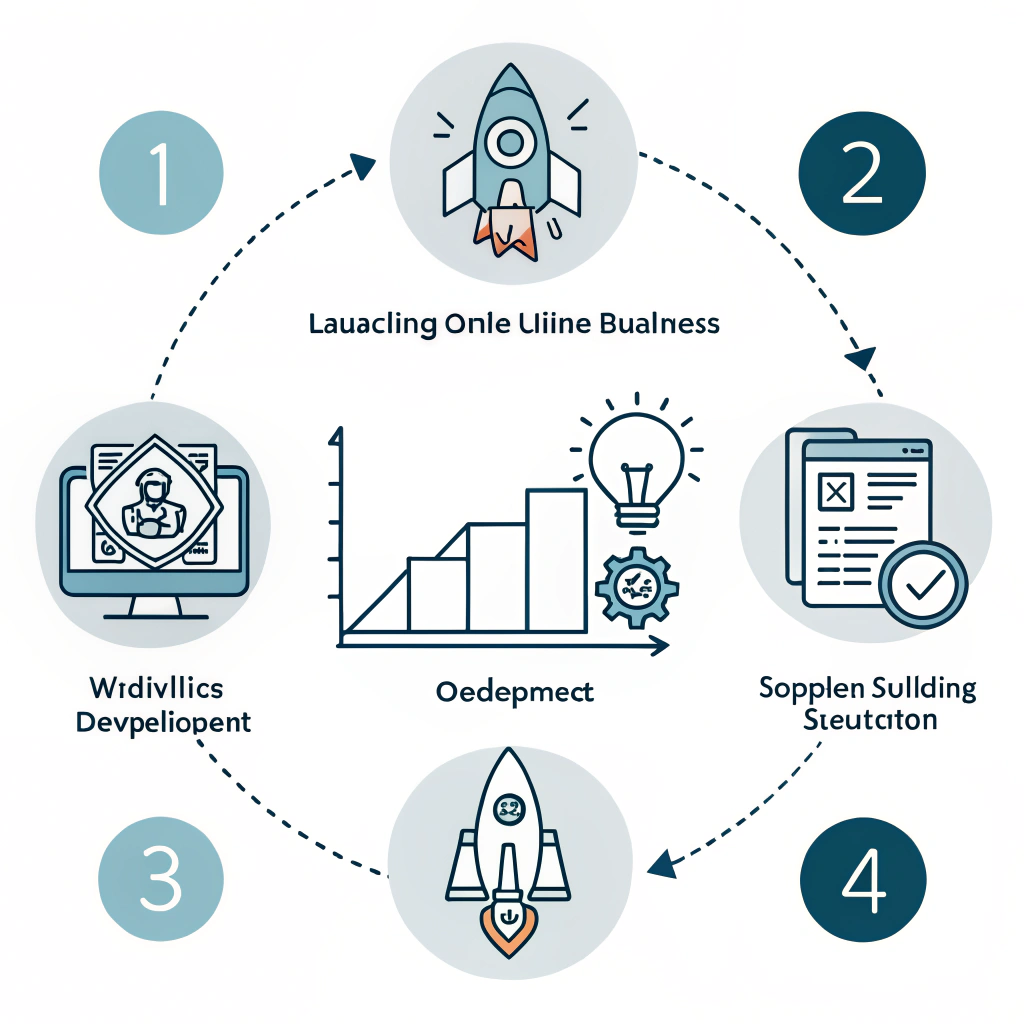
Online business success starts with a clear business plan, a deep understanding of your market, and actionable steps, from idea validation to website launch and digital marketing implementation.
Starting an online business can seem daunting at first, especially for B2B entrepreneurs who are transitioning from traditional commerce to the digital realm. In today’s fast-paced market, a successful online business startup1 hinges on strategic planning, effective digital marketing, and reliable supplier relationships. This article breaks down the process into manageable steps and provides actionable advice to guide you through each stage—from idea validation to the final launch.

Many entrepreneurs face common challenges when starting an online business. These include:
- Identifying a profitable niche.
- Navigating legal and business registration requirements.
- Building an efficient and secure website.
- Developing an effective e‑commerce strategy2 to attract and retain customers.
- Integrating digital marketing without overspending.
The complexity often leads to hesitation. However, with a structured approach, it’s possible to reduce risk and set your business on a course for success.
An online business offers many benefits compared to traditional brick-and-mortar operations, such as:
- Wider customer reach.
- Lower operational costs.
- Flexible work environment.
- The potential to easily scale operations later on.
Understanding these benefits encourages informed decisions and a clear vision, making each step in the process both practical and targeted towards your business goals.
Below is a detailed breakdown of the process, enriched with practical examples and actionable tips. Our solution-oriented approach is designed to demystify the launch process.
Before investing time and money, assess the viability of your new business idea:
- Research Your Niche: Start by exploring trends in your industry. Use online tools to analyze what competitors are offering on a digital marketing for small business3 level.
- Customer Feedback: Engage with potential customers through surveys or online forums to gauge interest.
- Competitive Analysis: Identify your unique selling proposition (USP).
Using this preliminary research, validate whether your product or service meets a genuine market need.
Constructing a digital business plan4 helps in mapping out the entire business process. Consider these key sections:
- Executive Summary: Outline your goals and vision.
- Market Analysis: Detail your target audience, industry trends, and competitive landscape.
- Operational Plan: Describe supplier sourcing, fulfillment methods, and team roles.
- Financial Projections: Estimate revenue, costs, and break-even point.
- Marketing Strategy: Define your approach to online customer acquisition, including SEO, PPC, and content marketing.
Below is a sample table summarizing the key components of a digital business plan:
| Section | Key Focus | Action Items |
|---|---|---|
| Executive Summary | Vision and overall goals | Define mission and outline short/long-term objectives |
| Market Analysis | Target audience and competitive landscape | Conduct surveys, identify trends, and analyze competitors |
| Operational Plan | Daily operations and supplier management | Detail sourcing, fulfillment, and inventory management |
| Financial Projections | Revenue, costs, and profitability | Create forecasts, set budgeting strategies, and cash flow analysis |
| Marketing Strategy | Digital marketing and online presence | Develop SEO, email, and social media tactics |
This plan not only clarifies your vision but also serves as a road map for the upcoming steps.
[image_place_holder_2]
The legal framework is essential for protecting your business and ensuring smooth operations:
- Business Name: Choose a unique and memorable name.
- Business Structure: Decide whether you want to operate as a sole proprietorship, partnership, or another structure like an LLC. Note that while an LLC is a common choice, it isn’t mandatory, as other structures may suit your needs just as well.
- Legal Tasks: Ensure you take care of licenses, permits, and any required registrations. It might be wise to consult with a legal expert to ensure compliance with local laws.
The decision on business structure impacts tax, liability protection, and even the future scalability of your company.
Your business website is the cornerstone of your online presence. Here’s how to ensure it’s effective:
- Domain and Hosting: Choose a memorable domain name and a reliable hosting service.
- User Experience (UX): Design a clean, intuitive website that is easy to navigate.
- Mobile Optimization: With a large share of traffic coming from mobile devices, make sure your website is responsive.
- E-commerce Platform: Whether you opt for a platform like Shopify, WooCommerce, or another, ensure it supports your business model effectively.
- Security Measures: Implement SSL certificates and secure payment gateways to protect customer data.
Investing time and money in website development will pay off through increased visitor engagement and better conversion rates.
For many online businesses, especially in the B2B space, effective supplier relationship management is crucial. Consider these steps:
- Research Suppliers: Identify potential suppliers who can offer quality products and reliable fulfillment.
- Build Relationships: Establish communication processes and check references or reviews.
- Negotiate Terms: Ensure you have clear agreements in place to handle logistics, returns, and warranties.
- Technology Integration: Utilize tools and software that streamline inventory management and order tracking.
Having a well-planned sourcing strategy minimizes disruptions and supports long-term business sustainability.
Creating buzz before your launch is essential. Your digital marketing strategy should include:
- Search Engine Optimization (SEO): Optimize your website for relevant keywords such as website development tips and B2B online ventures5. This improves your visibility in search engines.
- Content Marketing: Develop engaging content that speaks to your target market’s pain points. Blog posts, white papers, and social media updates can build credibility.
- Email Marketing: Collect potential customer data and start nurturing a community even before launch.
- Paid Advertising: Consider cost-effective ad campaigns on platforms like Google Ads or LinkedIn to drive targeted traffic.
A well-executed prelaunch strategy sets the stage for a successful market entry and builds the foundation for rapid growth upon launch.
Before going live, ensure every component of your business is tested:
- Website Testing: Perform thorough tests on various devices and browsers to fix bugs and improve performance.
- Supply Chain Verification: Double-check supplier capabilities and fulfill mock orders to verify the process.
- Marketing Trial: Launch a small-scale marketing campaign to gather insights on customer engagement and conversion rates.
Once testing is complete, launch your business with a planned campaign, monitoring performance daily. Adapt strategies based on initial feedback and analytics.
[image_place_holder_3]
As you build your online business, keep the following best practices in mind:
- Customer Support: Develop robust customer support channels. Excellent service can differentiate you from competitors.
- Cost Management: Keep your initial costs lean. Use free or low-cost digital marketing tools until your revenue stream builds.
- Continuous Learning: The digital landscape evolves quickly. Stay updated with industry trends and continuously refine your strategies.
- Tracking and Analytics: Use analytics tools to monitor website performance, marketing efficacy, and sales trends. Data-driven decisions will refine your strategy over time.
- Scalability Planning: Consider how your systems, from the website to supply chain processes, will adapt as your business grows.
Starting an online business doesn’t happen overnight. It requires meticulous planning, market research, a robust legal foundation, a user-friendly website, and strategic digital marketing. Each step, from initial idea validation to supplier sourcing, sets the stage for your business’s sustainable success.
By following the detailed, actionable steps outlined above, you’ll be well-equipped to overcome common challenges and mitigate risks. A well-planned and executed online venture can drive long-term business growth and open up new market opportunities.
For entrepreneurs looking to transition into digital commerce, remember:
- Validate your idea with solid market research.
- Develop a comprehensive business plan to serve as your roadmap.
- Prioritize building a professional and user-friendly website.
- Establish strong relationships with reliable suppliers.
- Implement a strategic digital marketing plan to acquire and retain customers.
- Test your business model thoroughly before the full-scale launch.
With these actionable strategies, you are now ready to take the next step in your entrepreneurial journey. Good luck, and may your online business flourish!
How do I start my first online business?
To start your first online business, assess your idea’s viability through market research, develop a comprehensive business plan, choose a strategic business name and structure, handle all necessary legal tasks, build a professional website, set up efficient sourcing and fulfillment methods, implement prelaunch marketing strategies, and finally test and launch your business.
Do I need an LLC to start an online business?
No, forming an LLC is not a requirement to start an online business. There are several business structure options, including sole proprietorship, partnership, C corporation, S corporation, and others. The best choice depends on your specific operational needs and long-term business goals.
Can you start an online business with no money?
Yes, it is possible to begin an online business with little to no money. Many entrepreneurs start with a lean setup—by launching a blog or website using free platforms, generating revenue through advertising, affiliate marketing, or selling digital products and services—and gradually reinvesting profits to grow the business.
-
online business startup: Read this article to understand the foundational steps and challenges of launching a new venture in the digital space, with strategies tailored for B2B entrepreneurs. Back to term ↩
-
e‑commerce strategy: Learn how to develop and implement an effective e‑commerce strategy that drives customer engagement and retention, critical for online business success. Back to term ↩
-
digital marketing for small business: Discover insights on how small businesses can leverage digital marketing channels effectively to compete in today’s online marketplace. Back to term ↩
-
digital business plan: Gain valuable guidance on creating a comprehensive digital business plan that outlines strategy, operations, and financial projections for sustainable growth. Back to term ↩
-
B2B online ventures: Explore strategies and case studies on how B2B companies can successfully transition into the digital realm and harness online tools for business expansion. Back to term ↩