
US trade policy is indeed reshaping global supply chains by altering trade rules, imposing tariffs, and encouraging companies to rebalance sourcing strategies towards increased resilience and risk mitigation.
Over the past few years, evolving US trade policies have significantly impacted the structure of global supply chains. Changes in tariffs, trade agreements, and regulations are forcing companies worldwide to re-examine their sourcing strategies. In this analysis, we explore how these shifts are unfolding, what they mean for international trade, and how procurement managers and supply chain executives can navigate the resulting challenges and opportunities.
The evolving landscape of US trade policy is driven by several core factors. Notable among these are:
- Trade Tariffs and Barriers1: The imposition of tariffs on imports from key markets, particularly amid tension with China, has resulted in companies reassessing sourcing cost structures.
- Regulatory and Compliance Changes2: New rules and mandates aim at reducing dependency on particular countries and ensuring a secure, controlled flow of goods.
- Geopolitical Uncertainty: Uncertainty stemming from political decisions and global power shifts forces businesses to build more resilient supply chains.
- Incentives for Domestic Re-shoring: Policies may encourage companies to consider alternative options, including domestic production or sourcing from regions less affected by political friction.
Each of these elements is interlinked, demonstrating a clear trend towards a more fragmented yet agile supply chain model. While tariffs and regulatory changes initially increase costs and complexity, they also push businesses to diversify their supply sources, resulting in increased flexibility over the long term.
A closer examination of the driving forces behind these shifts reveals several key dimensions:
-
Historical Context and US Trade Policy Evolution
Since World War II, US trade policy has aimed to foster an open, transparent, and nondiscriminatory rules-based trading system. Over the decades, principles of free trade have supported economic growth and competitiveness. However, relative to past policies, recent years have seen a pivot towards protectionism to counterbalance domestic economic pressures and national security concerns. This policy pivot has been marked by:- Revisiting existing trade agreements such as NAFTA (now USMCA).
- Engaging in targeted tariff policies, primarily with China.
- Advocating for a rebalanced approach that simultaneously supports domestic production and secures competitive international relationships.
-
Disruption and Adaptation in Global Supply Chains
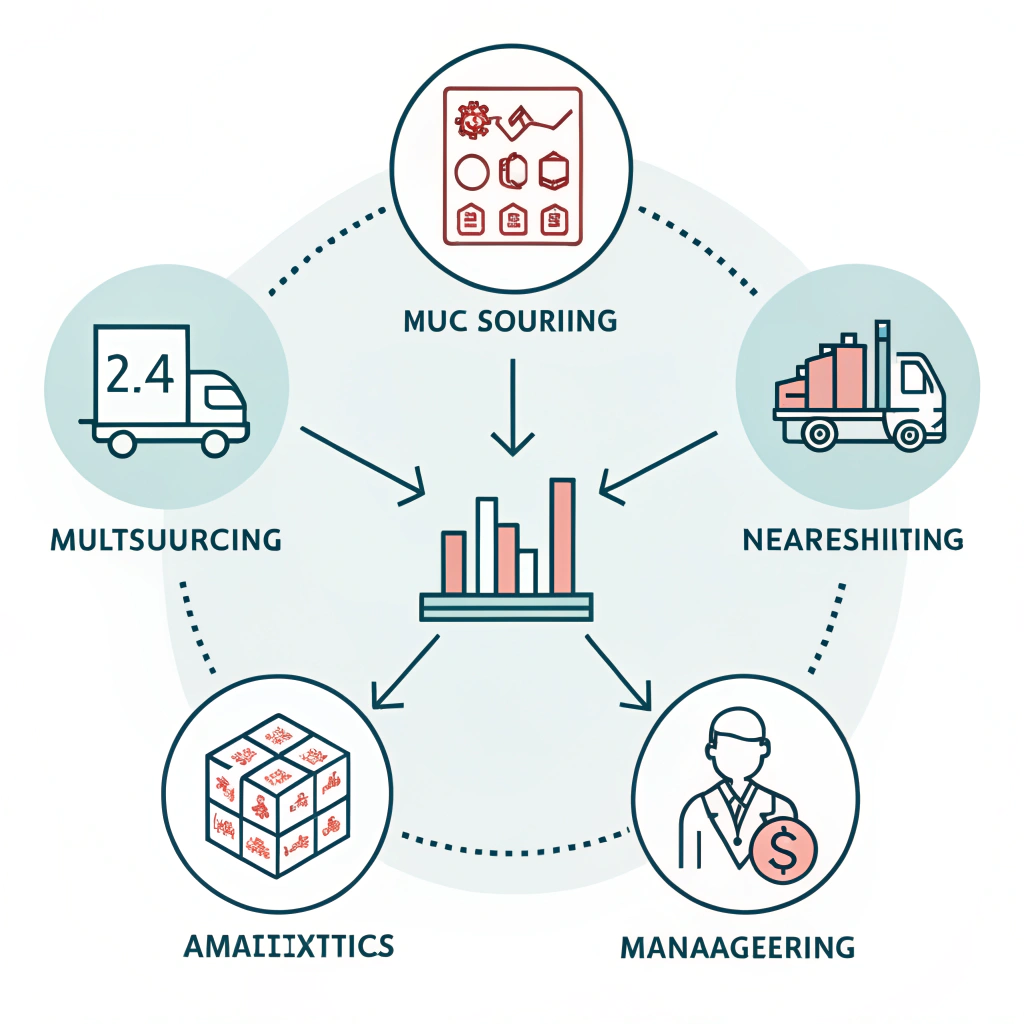
Global supply chains, once optimized for cost-efficiency and scale, now face realignment. Companies are forced to weigh the benefits of global diversification against the risks stemming from regulatory unpredictability. Supply chain resilience3 now takes center stage. Businesses are employing several strategies:- Multi-sourcing: Rather than relying on a single supplier, companies now diversify their supplier base.
- Nearshoring and Reshoring: To mitigate uncertainties related to tariffs and import delays, some companies are shifting production closer to home markets.
- Enhanced Inventory Management: With potential delays and disruptions, maintaining optimal inventory levels becomes crucial.
- Digital Transformation4: Leveraging data analytics and IoT technologies to monitor supply chain performance in real time aids in quick decision-making during turbulent periods.
-
Sourcing Strategy Adjustments and Risk Mitigation
In response to these challenges, procurement leaders must revisit their sourcing strategy. A balanced approach that weighs cost, reliability, and the potential for geopolitical risk is essential. The following table provides a snapshot comparison between traditional sourcing and current strategic options:
| Aspect | Traditional Sourcing | Current Strategic Sourcing |
|---|---|---|
| Supplier Diversity | Limited, often focused on low-cost regions | Expanded to mitigate single-source risks |
| Trade Dependence | High reliance on global low-cost manufacturing | Emphasis on regional diversification and resilience |
| Tariff Exposure | Lower awareness of tariff impacts | Increased focus on monitoring and mitigating tariffs |
| Inventory Management | Lean inventories for cost efficiency | Buffer stocks and agile supply chain frameworks |
| Digital Integration | Basic IT infrastructure | Advanced analytics, IoT, and supply chain visibility tools |
By undertaking these strategic shifts, companies not only avoid potential pitfalls associated with US trade policy uncertainties but also position themselves to benefit from opportunities that arise from a diversified and more resilient supply chain.
In-depth analysis of policy drivers shows that current US trade policy is heavily data-driven and responsive to both domestic and international economic feedback. Studies indicate that the imposition of tariffs and other regulatory changes have collectively increased operational costs for many businesses. Yet, these changes also serve as catalysts for innovation in supply chain management practices.
A significant factor behind these trade policy shifts is the desire to reduce vulnerability to geopolitical risks. Companies are increasingly aware that overreliance on a single geographic region for production can pose significant risks during political tensions or global crises. The need to simultaneously safeguard reliability and efficiency has encouraged businesses to adopt adaptive sourcing strategies5.
The current landscape compels businesses to develop agile crisis management solutions, including:
- Scenario Planning: Running simulations to predict potential outcomes of trade disputes.
- Contingency Strategies: Establishing alternative sourcing or distribution channels in case of regulatory disruptions.
- Collaborative Innovation: Working closely with suppliers and logistics providers to design robust supply chain systems.
It is also essential to understand the broader international trade context. Globalization has transformed supply chains, breaking the traditional boundaries that once defined national markets. Companies increasingly benefit from:
- Access to a broader range of suppliers.
- Enhanced competition, leading to cost efficiencies.
- Opportunities for innovation driven by diverse market influences.
However, as nations adopt protectionist measures or redefine trade relationships, companies must be nimble. The interconnected nature of global supply chains means that changes in one region ripple across the entire network. US trade policy adjustments are therefore not isolated events; they are part of a larger flow of international trade dynamics that require constant monitoring.

For procurement managers and supply chain executives, the following are actionable recommendations in response to recent US trade policy changes:
-
Monitor Policy Updates Regularly
Staying informed is the first step. Subscribe to dedicated briefings on trade policy changes and geopolitical assessments. Use technology tools that filter news and updates in real time so you are never caught off-guard by sudden policy adjustments. -
Emphasize Supply Chain Resilience
Reassess your supply chain network regularly. Identify key vulnerabilities—such as reliance on specific regions or suppliers—and develop a mitigation plan. This may include diversifying your sourcing strategy, building stronger supplier relationships, and investing in digital tracking systems. -
Establish Strategic Partnerships
Tap into the insights of sourcing partners who have extensive experience navigating the Chinese market and understanding US trade policy. Trusted partners can offer local knowledge, risk assessments, and accurate forecasts, helping you negotiate better terms and streamline your procurement process. -
Integrate Data Analytics and Real-Time Monitoring
Utilize advanced data analytics systems to gain real-time visibility into your supply chain. Key metrics such as lead times, shipping delays, and tariff impacts can be tracked and analyzed to provide actionable insights and prompt adjustments as needed. -
Consider Long-Term Strategic Adjustments
Beyond immediate tactical shifts, invest in sustainable, long-term strategies. For example, examine the potential benefits of nearshoring or reshoring manufacturing capabilities, which may reduce exposure to geopolitical risks and improve responsiveness during disruptions.
By adopting these measures, companies can not only mitigate the risks posed by evolving US trade policy but also uncover hidden opportunities for innovation and growth throughout their global supply chains.
In conclusion, while uncertainties remain as US trade policy continues to evolve, the reshaping of global supply chains is an ongoing process that demands strategic foresight and proactive management. The shifts spurred by new tariffs, regulatory changes, and geopolitical tensions are prompting companies worldwide to become more resilient and agile. By rethinking supplier networks, investing in digital transformation, and monitoring policy developments vigilantly, businesses can position themselves to thrive in this new environment.
For senior procurement managers, supply chain executives, and business strategists, the key takeaway is simple: adapt and diversify now to secure a competitive edge in an increasingly unpredictable global market. This approach not only addresses immediate risks but also establishes a robust foundation for long-term success.
People Also Ask
Q: How has globalization changed supply chains for the United States?
A: Globalization has broadened supply chains by allowing access to products and suppliers from around the world, benefiting both consumers and retailers through increased competition, cost savings, and a wider range of available products.
Q: What is the United States trade policy?
A: The United States trade policy is designed to promote economic growth and competitiveness by reducing international trade barriers, enforcing transparent and fair trade rules, and supporting an open international trading system through frameworks such as the WTO.
Q: What is the US national supply chain strategy?
A: The US national supply chain strategy focuses on ensuring the efficient and secure movement of goods while building a resilient global supply chain capable of withstanding evolving threats and rapidly recovering from disruptions.
-
Trade Tariffs and Barriers: Click to read an in-depth article on how trade tariffs and barriers influence global sourcing decisions and cost structures. ↩
-
Regulatory and Compliance Changes: Click to understand the evolving compliance landscape and its impact on international trade operations. ↩
-
Supply chain resilience: Click to learn about strategies for building more resilient supply chains to mitigate risks and enhance agility. ↩
-
Digital Transformation: Click to explore how digital technologies like IoT and data analytics are reshaping supply chain management. ↩
-
adaptive sourcing strategies: Click to discover methods for adapting sourcing strategies to balance cost, risk, and operational efficiency in a volatile trade environment. ↩