

China’s economy is not entirely dependent on the US, but the interdependencies between these two economic giants play a significant role in shaping global trade, investments, and supply chains. In this article, we explore the nuances of these dependencies, examining trade data, investment flows, and the broader implications for B2B sourcing and strategic planning.
At first glance, it might seem that China’s dynamic growth is largely driven by its relationship with the US. While US demand for Chinese exports and significant American investments have indeed bolstered China’s rapid development, the reality is more complex. China has built a diversified economic model with extensive engagements across Asia, Europe, Africa, and beyond. However, its ties with the US remain essential, creating a blend of dependency and mutual reliance that affects global market dynamics.
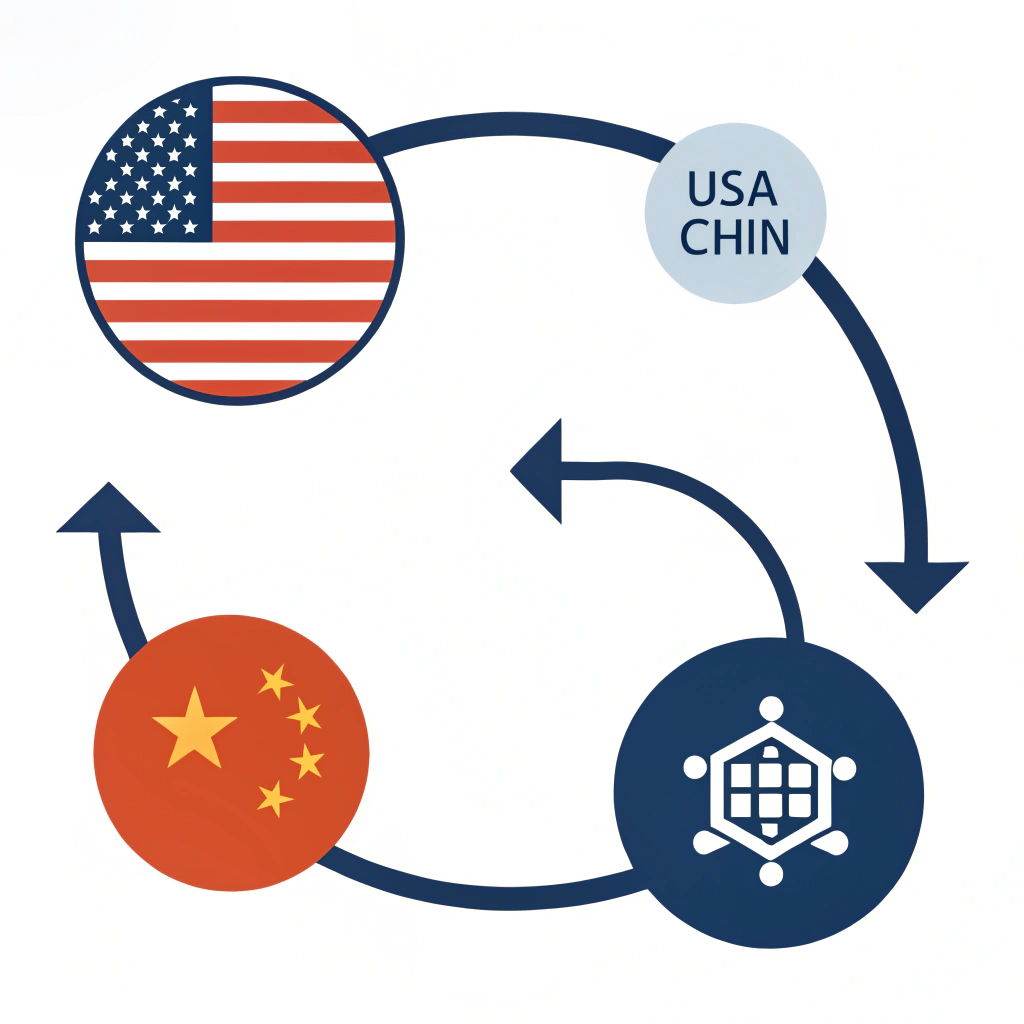
The subject of whether China’s economy is dependent on the US is more than just a question of export volumes or GDP contributions. It involves analyzing several distinct but intertwined factors:
- Trade Dependencies: The bilateral trade between the US and China has been a driving force for growth on both sides. China exports billions of dollars’ worth of goods to the US, fueling manufacturing and industrial sectors.
- Investments & Capital Flows: American investments in China—through direct investments or strategic joint ventures1—contribute to the development of high-growth industries and modern infrastructure projects.
- Supply Chain Interconnections: Global supply chains2 have been built around the manufacturing prowess of China and the consumer markets of the US. This interconnection means that disruptions in one region often have ripple effects worldwide.
- Technological and Intellectual Exchange: Both nations benefit from the exchange of technology, ideas, and innovations, further intertwining their economic trajectories.
These factors form the backbone of the complex relationship between the two economies. For B2B companies, understanding these subtleties is critical when designing sourcing strategies and making informed international business decisions.
One of the most visible signs of interdependence is the volume of bilateral trade between China and the US. China exports a vast array of products to the US, covering sectors such as electronics, textiles, and industrial machinery. Simultaneously, the US imports a substantial amount from China. According to data, China depends on the US for approximately $580 billion in exports annually. This trade contributes significantly to China’s manufacturing growth and consumer market stability.
Conversely, the US benefits from China’s production capabilities and its role as a hub for global supply chains. American companies frequently leverage Chinese manufacturing excellence to reduce production costs and enhance competitiveness. This cross-dependency underlines an important point: while China may not be solely dependent on the US, the depth of their trading relationship has broad implications for both economies.
The financial interconnections between the two countries extend beyond exports. The US has been a major source of foreign direct investment (FDI)3 into China, particularly in joint ventures that drive technological development and high-growth industries. These investments not only help American companies expand their global reach but also enable Chinese firms to scale up and adopt progressive management practices. In return, China’s market offers new frontiers for American innovation and expansion.
This mutual flow of capital underlines that both nations reap benefits from an active and intertwined investment ecosystem.
Global supply chains2 have matured to a point where disruptions in one link can affect the whole chain. China’s role as the “world’s factory” means that any trade dispute or economic slowdown can lead to significant supply chain adjustments worldwide. For businesses sourcing products from China, understanding these dependencies is crucial for risk management and contingency planning. Alternately, the US not only relies on Chinese production but also benefits from its cost efficiencies, making it integral to global market stability.

To illustrate these interdependencies numerically, consider the following table summarizing key trade and investment figures:
| Factor | China’s Perspective | US’s Perspective |
|---|---|---|
| Annual Export Value | ~$580 billion from US demand | Crucial supplier to US industries |
| Foreign Direct Investment (FDI) | Significant capital from US ($124 billion) | Expanding market and innovation reach |
| Strategic Joint Ventures | Technology and high-growth sectors | Leveraging cost-effective production |
| Contribution to Global Supply Chains | Central hub for manufacturing | Major consumer and technological investor |
This table highlights that while China has diversified its economic channels, the US remains an essential partner across multiple dimensions—a factor that continues to influence strategic decisions in international trade.
Given the intricate interplay between dependence and diversification, B2B companies must adopt flexible sourcing strategies and contingency plans. Here are some key considerations:
- Risk Management: Geopolitical tensions4 or sudden policy changes can disrupt bilateral trade. Companies should design supply chain contingencies and dual-sourcing strategies to minimize risks.
- Cost-Effectiveness vs. Diversification: Deciding between cost savings from Chinese manufacturing and the risk of over-dependence on a specific market is a critical balance. Evaluating multi-regional sourcing options can mitigate this risk.
- Technological Integration: Leveraging data analytics and advanced forecasting models helps companies anticipate market changes influenced by US-China relations, allowing for proactive decision-making.
- Local and Global Scale: Companies should consider integrating local suppliers with international networks to build a flexible, resilient supply chain that can adapt to shifts in both domestic and global economies.
Implementing these strategies not only strengthens operational resilience but also brings new insights into growth opportunities across diverse markets.
Consider a multinational electronics manufacturer that has long relied on Chinese suppliers for components. When trade tensions between the US and China escalated, the company evaluated its sourcing risks. Through a strategic review, the company identified alternative suppliers in Southeast Asia while maintaining key production lines in China to capitalize on cost benefits.
Key outcomes of this strategy included:
- Continuity in supply chain operations despite temporary disruptions.
- Enhanced pricing flexibility by balancing high-volume production with diversified sourcing.
- Improved risk management by not being overly reliant on one country’s economic policy shifts.
This example shows that even in a scenario where China heavily influences global manufacturing, proactive sourcing strategies allow for operational agility and reduced systemic risk.

For business strategists and supply chain managers, several critical insights emerge from the analysis of US-China economic interdependence:
- Dynamic Economic Landscapes: While the US remains a key market for China’s exports, the global economic environment is evolving. New trade agreements, shifting consumer preferences, and emerging markets are continuously reshaping global supply distributions.
- Technological Disruption: Digital transformation and automation are reducing the reliance on traditional manufacturing hubs. B2B companies can integrate advanced technology solutions to predict market trends and adapt sourcing strategies accordingly.
- Geopolitical Factors: Trade disputes, tariffs, and regulatory changes can rapidly alter economic dependencies. Staying informed about policy changes and engaging with economic forecasting experts can help mitigate associated risks.
- Invest in Supply Chain Visibility: Leverage real-time data tracking to monitor inventory levels, order fulfillment, and supplier performance across multiple regions.
- Diversify Sourcing: Consider integrating suppliers from regions less impacted by US-China tensions. This helps to reduce vulnerability and maintain operational stability.
- Collaborate with Experts: Partner with sourcing specialists who have extensive market knowledge and can provide tailored solutions to navigate these economic complexities.
- Regularly Review Trade Policies: Keep abreast of international trade regulations and adjust procurement strategies as needed to remain agile in a volatile economic landscape.
The relationship between China’s economy and the US is characterized by deep-seated and mutually beneficial dependencies, intertwined with elements of diversification and risk management. While China’s economic growth is significantly influenced by its engagement with the US—ranging from trade to investments—this dependency is balanced by its efforts to secure multiple growth channels globally.
For B2B companies, understanding these dynamics is crucial. By adopting flexible sourcing strategies, investing in supply chain resilience, and staying informed of geopolitical shifts, businesses can continue to thrive even amidst complex global economic interdependencies.
Martin Chow, the founder of Mangors Sourcing, emphasizes that a clear view of these interrelationships empowers you to make informed decisions. Whether you’re optimizing your supply chain or exploring new market opportunities, understanding the subtleties of US-China economic ties will help you navigate the challenges and leverage the opportunities in today’s global trade environment.
Does China rely on US for anything?
China relies on the US for approximately $580 billion in exports each year, significant US investments, and joint ventures in emerging high-growth industries. This interdependence supports both economies by fueling manufacturing and technological advancements.
What countries depend on the US economy?
The US economy is integral to many countries, with top purchasers of US goods in 2022 including Canada, Mexico, China, Japan, and the United Kingdom. These nations depend on US exports as part of their economic ecosystems.
-
Strategic Joint Ventures: Click to learn about the role of strategic joint ventures in facilitating market expansion, sharing risks, and combining complementary expertise. ↩
-
Global Supply Chains: Click to understand the structure and challenges of global supply chains, including how they integrate production, logistics, and risk management on an international scale. ↩ ↩2
-
Foreign Direct Investment (FDI): Click to explore an article that explains how FDI impacts economic growth, drives technology transfer, and fosters cross-border business collaborations. ↩
-
Geopolitical Tensions: Click to read about how geopolitical tensions influence international trade policies and affect business strategies across global markets. ↩