
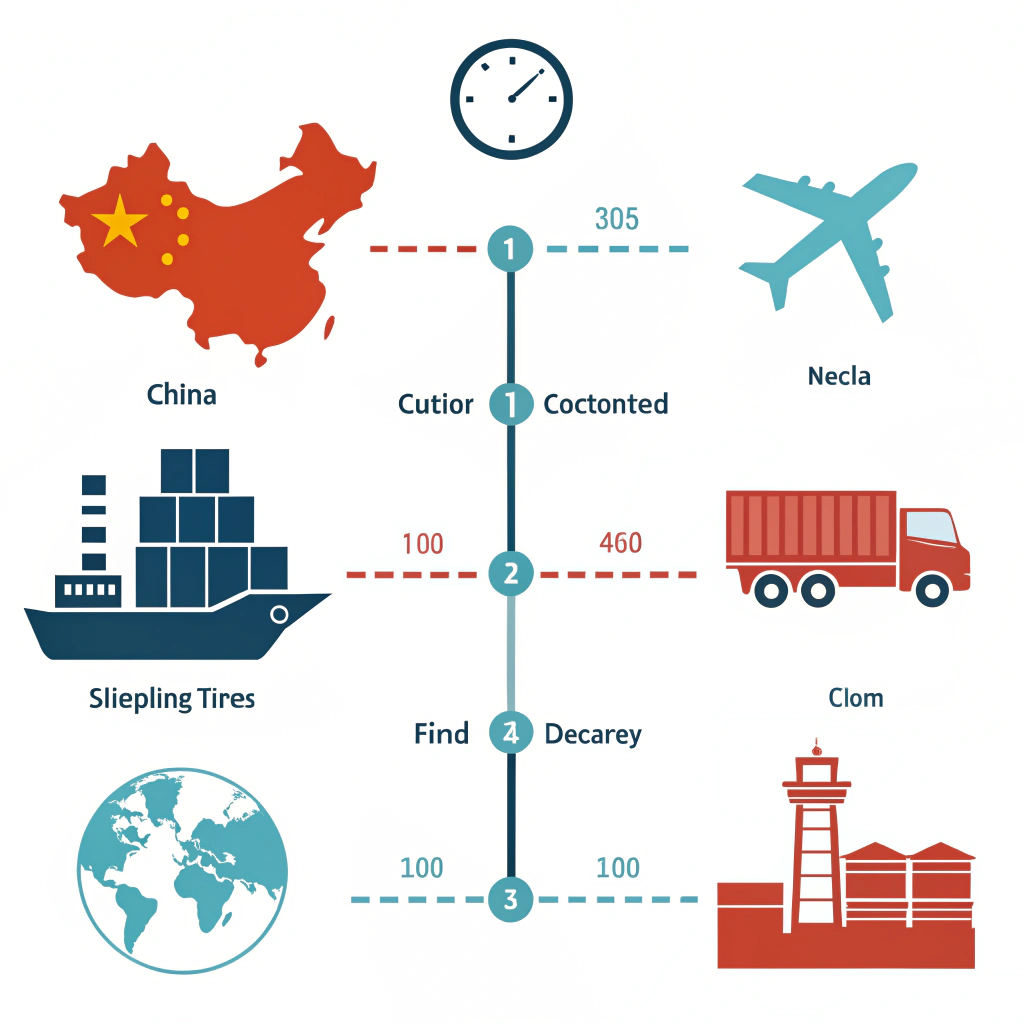
Shipping duration from China is mainly affected by transport mode (sea, air, courier), route and distance, customs clearance, port and carrier capacity, shipping terms (Incoterms1), seasonality and holidays, and how well your suppliers and freight forwarders coordinate. For most importers, total lead time is not only the “on‑water” transit; it also includes production, consolidation2, export formalities, and last‑mile delivery. If you understand each factor and plan around it, you can set realistic delivery dates and avoid painful stockouts.
Before looking at each factor, it’s important to separate:
- Production lead time: How long the factory needs to manufacture and prepare goods.
- Logistics lead time: All time from goods ready at factory to arrival at your warehouse.
When people ask “How long does shipping from China take?”, they usually mix both. In reality, your calendar should include:
| Stage | Typical Time (Indicative) |
|---|---|
| Product + packaging finalization | 1–3 weeks (longer for new products) |
| Mass production | 15–45 days (simple vs complex items) |
| Inland trucking to port/airport | 1–5 days |
| Export customs & terminal handling | 1–5 days |
| Main transport (sea/air/express) | 1–45+ days (mode & route dependent) |
| Import customs & local handling | 1–7 days |
| Domestic delivery to your facility | 1–7 days |
When planning inventory, calculate door‑to‑door lead time, not just “days on the vessel”.
The shipping method you choose will have the largest impact on transit time and cost.
Sea freight is slow but cost‑effective for bulk cargo.
Typical port‑to‑port transit times (under normal conditions):
| Route | FCL Sea Transit (Port to Port) |
|---|---|
| China → US West Coast | ~12–18 days |
| China → US East Coast (via Panama/Suez) | ~25–35 days |
| China → Northern Europe | ~28–40 days |
| China → Mediterranean | ~25–35 days |
| China → Australia | ~12–25 days |
But your door‑to‑door time often looks like:
- FCL: 25–45 days
- LCL: 30–55 days
Why LCL is longer:
- More handling and consolidation at origin.
- De‑consolidation and sorting at destination.
- Higher risk of delay if any shipper’s documents or cargo has issues.
Sea freight is best for:
- Stable products with predictable demand.
- Large volumes where cost per unit matters more than speed.
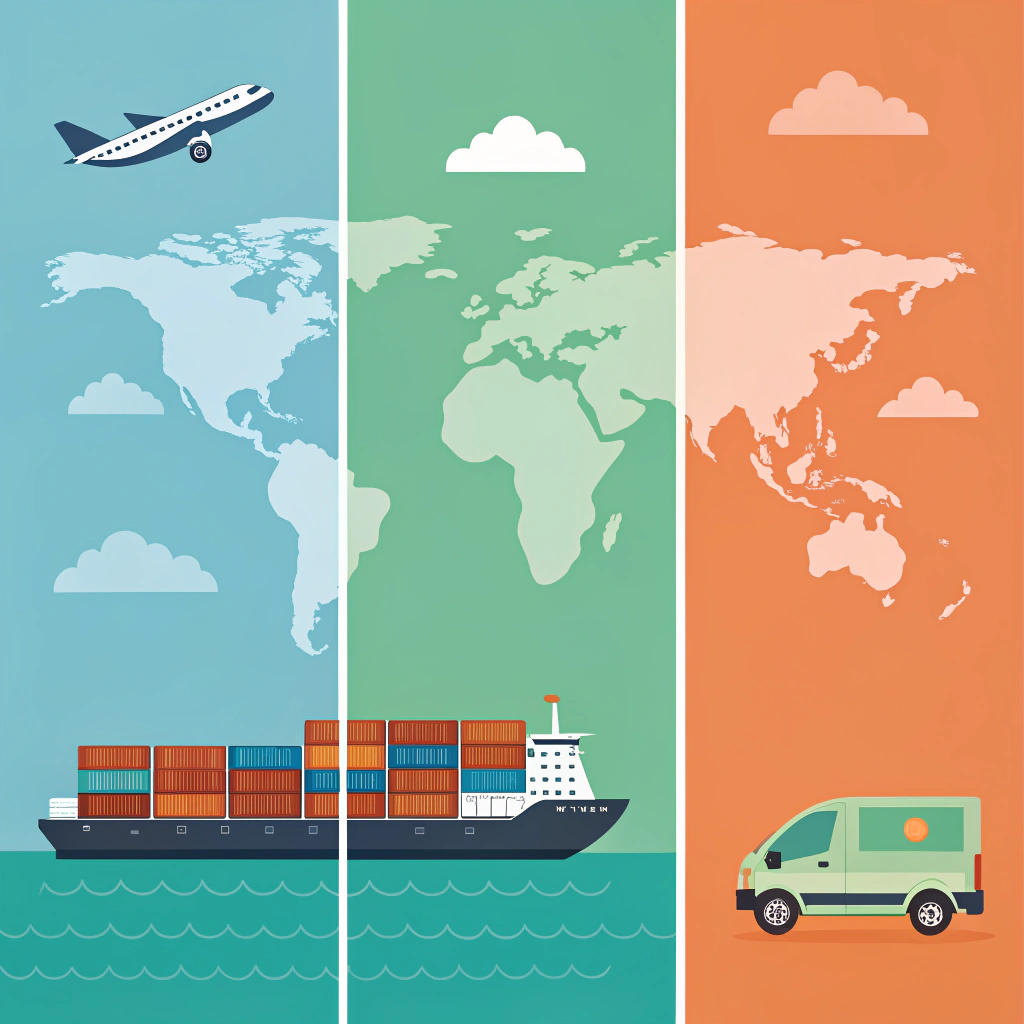
Air freight is much faster but more expensive than ocean.
Typical airport‑to‑airport transit:
- China → USA / Canada: 2–5 days
- China → Europe: 2–4 days
- China → Australia: 1–3 days
Door‑to‑door including export clearance and last mile:
- Usually 5–12 days if documentation is correct and space is available.
Within air freight, there are two broad types:
| Type | Speed | Cost Level | When to Use |
|---|---|---|---|
| Standard air freight | 5–12 days door‑to‑door | $$ | Medium urgency, moderate volumes |
| Priority / express air | 3–7 days door‑to‑door | $$$ | Urgent replenishment, high‑margin items |
Courier express collects from supplier (or warehouse) and delivers straight to your door.
Typical transit:
- China → USA / Europe: 3–7 days door‑to‑door.
- Remote areas can be 7–12 days.
Courier express is best for:
- Samples.
- Small, high‑value shipments.
- Emergency restocking when you cannot wait for sea or standard air.
Most importers use a mix:
- Sea freight for base stock.
- Air or express for urgent top‑ups when sales exceed forecast.
A simple rule of thumb:
- If freight cost is <10–15% of your product value: consider air for speed.
- If freight cost would exceed 30–40% of product value by air: use sea, plan earlier.
Even within the same mode, shipping route matters.
Common Chinese ports:
- North China: Tianjin, Qingdao, Dalian.
- East China: Shanghai, Ningbo.
- South China: Shenzhen (Yantian, Shekou), Guangzhou, Xiamen.
From these ports, different services and transit times exist.
Examples:
- Shanghai → Los Angeles: shorter than Qingdao → Savannah.
- Shenzhen → Rotterdam: often faster than smaller ports with trans‑shipment.
- Direct service: One vessel from China to destination; faster and more predictable.
- Trans‑shipment service: Containers move via an intermediate hub (e.g., Busan, Singapore); adds 3–10+ days and more delay risk.
If time is critical, ask your forwarder:
- Is this a direct sailing?
- What is the typical total transit time including trans‑shipment?
Even with the right route, capacity and congestion can change everything.
Port congestion can be caused by:
- Surging volumes (e.g., pre‑Christmas rush).
- Labor strikes.
- Covid‑related restrictions.
- Infrastructure bottlenecks.
Impact on your shipment:
- Vessel delays or rolled cargo (your container misses the intended sailing).
- Longer waiting times for berthing and unloading.
- Delays in returning empty containers.
Carriers sometimes cancel sailings (blank sailings) to manage capacity or respond to low demand. Result:
- Fewer departures per week.
- Longer intervals between vessels.
- Your container must wait for the next available ship.
To reduce risk:
- Book earlier during peak season.
- Choose carriers/routes with more weekly services.
- Work with forwarders who can re‑route if one carrier is heavily disrupted.
Customs clearance is a common cause of unexpected delay, both in China (export) and the destination country (import).
Key steps:
- Export declaration submitted by the exporter or forwarder.
- Inspection if customs flags the shipment.
- Release for loading.
Delays often come from:
- Incomplete or inconsistent documents (invoice, packing list, HS code).
- Export control for restricted items (e.g., batteries, chemicals).
- Random inspections.
At the destination, customs may:
- Clear the shipment automatically.
- Request extra documents (certificates, licenses).
- Physically inspect the goods.
Common issues:
- Incorrect HS code classification.
- Undervaluation or inconsistent declared value.
- Missing compliance documents (e.g., test reports, certificates).
- For some countries, unpaid duties or taxes.
You can reduce customs‑related delays by:
- Using correct HS codes and clear descriptions.
- Ensuring product compliance before shipment.
- Preparing all documents before the cargo arrives.
- Working with a competent customs broker/forwarder.
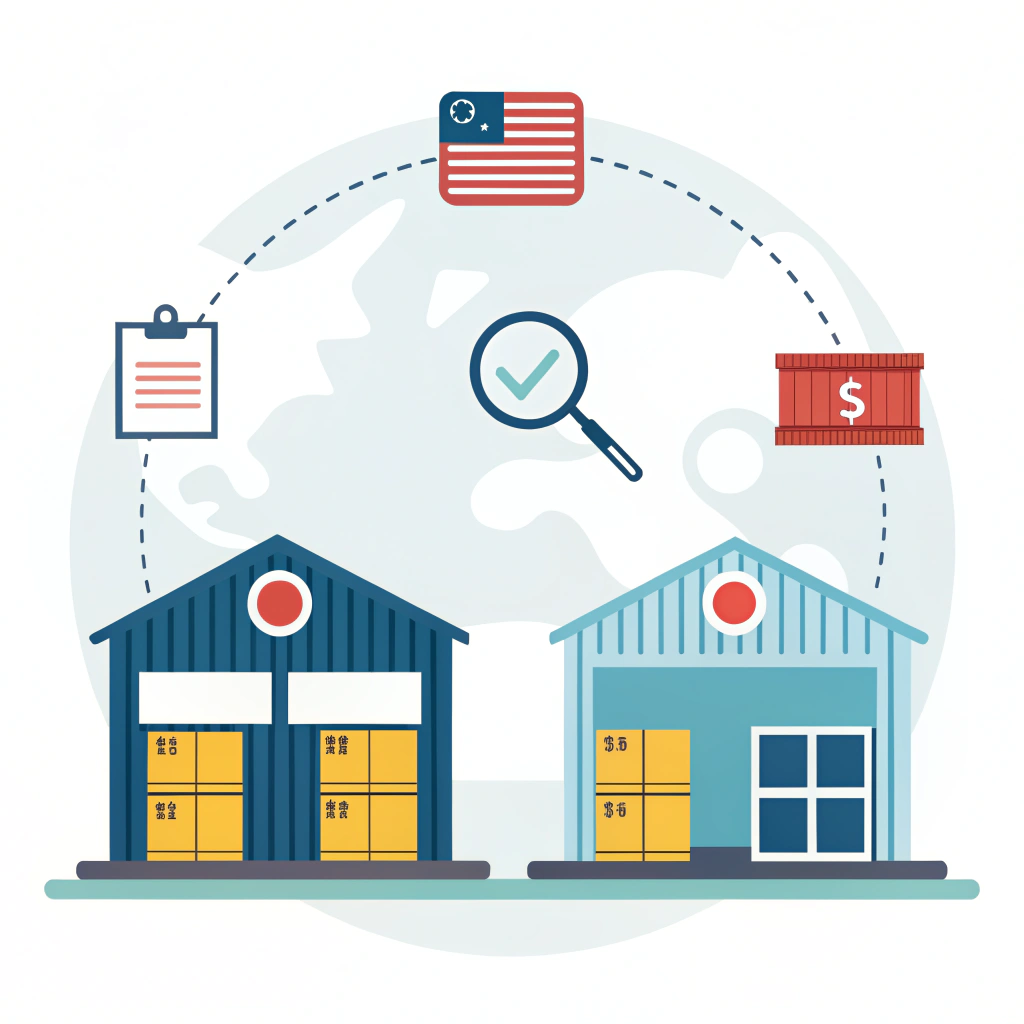
Incoterms define who is responsible for which costs and risks. They also influence your actual control over shipping time.
Common terms when buying from China:
| Incoterm | Seller’s Responsibility Ends | Buyer Controls From… | Impact on Shipping Time |
|---|---|---|---|
| EXW | At seller’s factory | Inland transport from factory | Max control, more work |
| FOB | On board at China port | Main freight + destination | Good balance for most buyers |
| CIF/CFR | At destination port | From port to your warehouse | Less control on freight |
| DAP/DDP | At your door | Mainly receiving goods | Seller/forwarder controls most |
Why this matters:
- With FOB or EXW, you (or your forwarder) choose the carrier, route, and schedule.
- With CIF/CFR or supplier‑arranged shipping, you may get:
- Slower services.
- Longer transit times chosen for cost, not speed.
- Less visibility and flexibility.
If shipping time is critical, prefer FOB and work with your own forwarder.
Shipping demand is not constant. High‑volume periods include:
- August–October: Pre‑Christmas stock for Western markets.
- January (pre‑Chinese New Year): Buyers rush to ship before factories close.
- Events like major sales campaigns (Black Friday, 11.11, etc.)
During these times:
- Space is tight.
- Rates are higher.
- Booking lead times increase.
- Port and depot congestion is more likely.
Chinese holidays can strongly affect production and shipping duration:
- Chinese New Year (CNY): Most factories close 1–3 weeks; logistics slows before and after.
- Golden Week (early October): One‑week national holiday; many businesses suspend or reduce operations.
- Other holidays (Labor Day, Mid‑Autumn Festival) also reduce capacity for a few days.
Practical tips:
- Avoid starting new orders just before CNY.
- Ship well before holiday cut‑offs announced by your forwarders.
- Expect at least 2–4 weeks of disruption around major holidays.
Some products take longer due to special requirements:
- Dangerous goods (batteries, chemicals, aerosols): Need special documentation, qualified carriers, and sometimes extra inspections.
- Oversized or heavy cargo: Limited container options and lower frequency of suitable services.
- Temperature‑controlled goods: Must match reefer service schedules.
Poor packaging or mis‑labeling can also trigger inspections or handling issues that add days to your timeline.
With LCL shipping, your cargo shares space with other shippers. Extra steps:
- Cargo moves to a consolidation warehouse in China.
- Containers are built combining multiple shipments.
- At the destination, containers are de‑consolidated, then delivered separately.
Each step adds time and risk of delay. This is why LCL is typically:
- 5–10 days slower than FCL on the same route door‑to‑door.
If you sell via Amazon or other platforms, you might use:
- Special cross‑border e‑commerce channels** (e‑commerce express lines)**3 (ePacket‑style, railway lines, or hybrid solutions).
- Direct injection into FBA warehouses.
Transit times can range from 7–25 days depending on the line, customs process, and destination country. They are usually faster than standard postal services but slower than DHL/UPS.
Even after customs clearance, the shipment still needs to reach:
- Your warehouse.
- An Amazon FBA center.
- A 3PL location.
Factors that affect this leg:
- Distance from port/airport to final destination.
- Domestic carrier capacity (especially during domestic peak seasons).
- Appointment systems at FBA or large DCs.
- Local traffic or weather.
Typical ranges:
- USA/Europe domestic trucking: 1–7 days depending on distance and appointments.
- Courier to final customer (B2C): 1–5 days.
If you schedule tight launch dates, these extra days matter.
Some disruptions cannot be eliminated, only mitigated:
- Typhoons affecting South China ports and nearby regions.
- Winter storms impacting North America and Europe ports and trucking.
- Geopolitical events: sanctions, war, or route closures (e.g., Suez disruptions).
- Pandemics or sudden health regulations.
These events can cause:
- Port closures or reduced operations.
- Vessel rerouting (longer distance).
- Sudden capacity shifts that extend transit times.
Planning buffers into your schedule is essential.
To turn all these factors into a practical strategy:
For each product/route, write down:
- Production lead time.
- Inland transport to port.
- Export clearance and port handling.
- Main transport (based on mode/route).
- Import clearance.
- Domestic delivery.
Then add a buffer:
- 20–30% in normal season.
- 30–50% around global or Chinese peak periods.
- Ship bulk by sea.
- Ship a small, urgent portion by air or express.
- For new product launches, send:
- First batch by air to avoid missing launch date.
- Main stock by sea to reduce cost.
- Prefer FOB so you can choose forwarders and routes.
- Work with a forwarder who:
- Provides honest door‑to‑door timelines.
- Warns you about upcoming holidays and peak seasons.
- Offers alternative routes if delays increase.
The main drivers of shipping time from China are:
- Transport mode (sea, air, express) and service level.
- Route and ports (direct vs trans‑shipment, port pair).
- Port congestion and carrier capacity (blank sailings, rolled cargo).
- Customs clearance and documentation quality.
- Incoterms and who controls logistics decisions.
- Seasonality and Chinese public holidays.
- Cargo type, consolidation, and last‑mile delivery.
- Weather and unforeseen events.
By understanding these, you can:
- Set realistic delivery expectations.
- Reduce surprises and emergency air shipments.
- Keep inventory levels healthier and your sales more stable.
Shipping time is mainly affected by the chosen transport mode (sea, air, or courier), the route and distance between origin and destination, and how often carriers operate on that route. Beyond that, customs clearance speed, port congestion, documentation accuracy, and seasonality (for example, pre‑Christmas or Chinese New Year) play major roles. The more handovers and checks your shipment goes through, the longer and more variable the transit time will be.
USPS does not generally stop all packages from China, but parcels can be delayed, returned, or refused when they do not meet U.S. customs or postal regulations. Reasons include missing or inaccurate customs declarations, unpaid duties or taxes on higher‑value items, restricted or prohibited contents, or changes in postal agreements and cost structures. When mail from China is non‑compliant or uneconomical under current rules, USPS and U.S. customs may hold or return it instead of delivering it.
-
Incoterms: Reading the article will help you understand how different trade terms allocate costs and risks between buyer and seller, so you can choose terms that improve transit time control and negotiation power. ↩ ↩
-
Consolidation: Reading the article will show how combining multiple shipments into one load affects cost, lead time, and delay risk, and how to design consolidation strategies that fit your order volume. ↩ ↩
-
Cross‑border e‑commerce channels (e‑commerce express lines): Reading the article will clarify how these specialized logistics products work, how they compare with courier and postal options, and how to select the right lane for platforms like Amazon or other marketplaces. ↩ ↩