
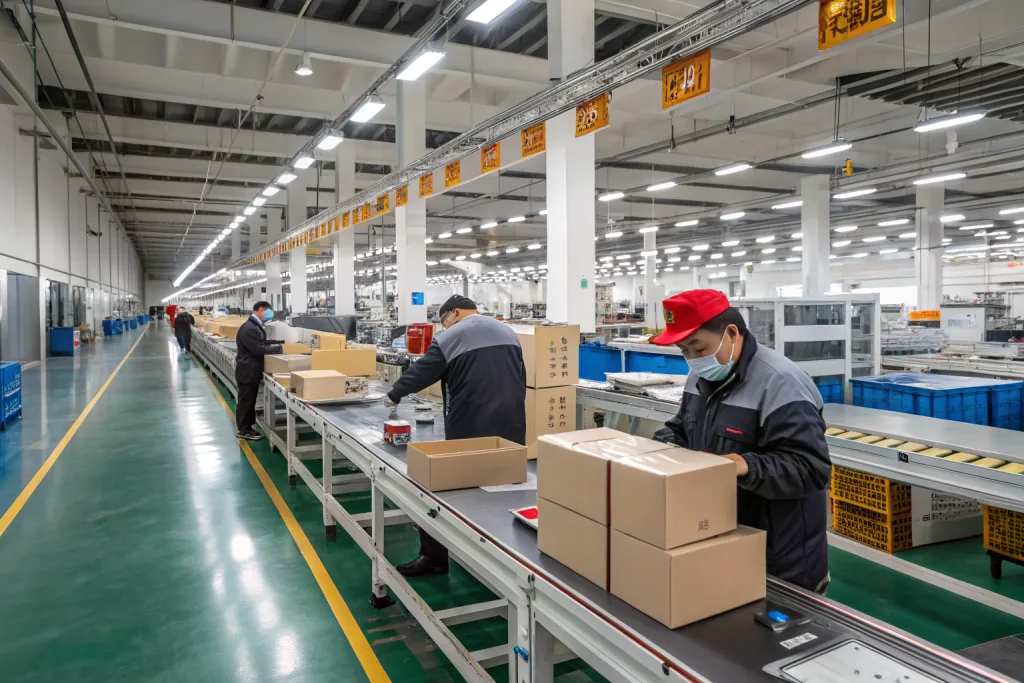
Custom Product Manufacturing in China: From Idea to Shelf
Custom product manufacturing in China typically takes 8-16 weeks from design approval to final shipment, with production costs 30-50% lower than Western manufacturers, making it the ideal choice for brands launching their first product line or scaling existing inventory. By leveraging China’s mature supply chain ecosystem, established quality control infrastructure, and access to specialized factories across thousands of industries, businesses can bring custom products to market faster and more affordably than ever before.
Whether you’re launching a new e-commerce brand, developing private label products, or manufacturing custom components, understanding the China manufacturing process is essential. This guide walks you through each stage—from supplier selection to final delivery—with real numbers and practical insights to help you avoid costly mistakes.
How Does Custom Manufacturing in China Work?
Custom product manufacturing in China follows a structured process: you submit specifications, manufacturers provide quotes and samples, you place orders, production occurs with quality checkpoints, and final products ship to your warehouse or customers. The entire cycle depends on product complexity, order volume, and your timeline requirements.
Here’s what the typical timeline looks like:
- Design & Specifications (1-2 weeks): You provide detailed drawings, materials, colors, and requirements. Manufacturers like those in Shenzhen’s electronics cluster or Guangzhou’s apparel district use these specs to quote accurately.
- Sample Development (2-4 weeks): The factory produces 1-5 samples for your approval. Sample costs range from $100-$1,500 depending on product complexity. Electronics samples cost more than textiles.
- Quote & Order Confirmation (3-5 days): Once you approve samples, you receive formal quotes with pricing tiers for different order quantities (MOQs typically range from 500-5,000 units depending on product type).
- Production (4-8 weeks): Mass manufacturing begins after deposit payment (usually 30-50% of total order value). Factories maintain production schedules with buffer time for quality control.
- Quality Inspection & Packaging (1-2 weeks): Third-party QC inspectors (or in-house teams) verify 100% sample batches before final packaging and labeling.
- Shipping (2-4 weeks): Products move via sea freight (most economical at $2,000-$8,000 per 20-foot container) or air freight ($8-$15 per kg, faster but costly).
What Are Typical Costs and MOQ Requirements?
Custom manufacturing costs in China vary dramatically by product category, but here’s what real businesses typically encounter:
| Product Category | Typical MOQ | Unit Cost (at MOQ) | Retail Price Range | Lead Time |
|---|---|---|---|---|
| Electronics (Bluetooth speakers) | 1,000-2,000 | $8-$15 | $35-$65 | 10-12 weeks |
| Apparel (Custom branded shirts) | 500-1,000 | $2.50-$4.50 | $15-$25 | 8-10 weeks |
| Home & Kitchen (Coffee mugs, drinkware) | 1,000-2,000 | $0.80-$2.00 | $8-$15 | 6-8 weeks |
| Cosmetics & Personal Care | 5,000-10,000 | $1.20-$3.50 | $12-$30 | 12-14 weeks |
| Furniture & Fixtures | 100-500 | $50-$200 | $200-$800 | 10-14 weeks |
Cost Breakdown Example: Custom Wireless Earbuds
- MOQ: 1,500 units
- Manufacturing cost: $12 per unit = $18,000
- Packaging & labeling: $0.60 per unit = $900
- Quality inspection: $300-$500 total
- Sea freight (shared container): $1,200-$1,800
- Customs clearance & import duties (25% on electronics): $4,050
- Total landed cost: $26,450 for 1,500 units = $17.63 per unit
- Retail selling price: $49.99 (285% markup)
Import tariff rates vary by product classification under the Harmonized Tariff Schedule (HTS). Most consumer electronics face 0-25% tariffs, while textiles range 12-20%, and furniture typically 0-5%. Working with a sourcing agent like Mangors Sourcing helps you classify products correctly and minimize duty costs.
Is It Illegal to Make Replicas in China?
Yes, manufacturing counterfeit or replica products that infringe on existing trademarks, patents, or copyrights is illegal in China and everywhere else—both for manufacturers and importers. Chinese law enforces intellectual property protection through the China Trademark Office, Patent Office, and Copyright Administration, with penalties ranging from factory shutdowns to criminal prosecution.
However, custom manufacturing of original products is completely legal. You can manufacture:
- Private label products: Your own branded items manufactured by third-party factories (e.g., “Your Brand Name” wireless earbuds)
- Original designs: Products you’ve designed or commissioned that don’t copy existing patents or trademarks
- Licensed products: Items manufactured under official licensing agreements (e.g., Disney merchandise with proper licensing)
- Generic products: Non-branded commodity items (plain t-shirts, basic phone cases, standard containers)
The distinction matters: creating a product similar in function to an existing item is legal (competition is healthy); copying a brand’s specific trademark, design patent, or proprietary features is illegal.
Practical Protection Steps:
- Trademark your brand with the USPTO (US), EUIPO (Europe), and China’s CNIPA before manufacturing
- Ensure your product design doesn’t infringe existing design patents (search Google Patents, WIPO database)
- Request manufacturing agreements that guarantee original production (not counterfeit parts)
- Use a sourcing agent to vet factories and verify they’re not producing fake goods on the side
Which Business is Booming in China?
E-commerce infrastructure, technology exports, and consumer goods manufacturing are the fastest-growing sectors in China right now, with particularly strong demand in: electronics and semiconductors, new energy vehicles (EVs and batteries), renewable energy components, smart home devices, cosmetics and beauty products, and sustainable packaging solutions.
For Western importers specifically, these categories show the strongest margins and fastest inventory turnover:
- Smart Home & IoT Devices (25-40% annual growth): Smart speakers, WiFi cameras, temperature sensors, smart plugs. Shenzhen leads with 40+ major manufacturers. Average wholesale margin: 40-60%.
- Fitness & Wellness Products (18-32% growth): Resistance bands, yoga mats, massage guns, smart scales. Low MOQs (500-1,000), quick production (6-8 weeks). Margin: 50-65%.
- Sustainable & Eco-Friendly Products (22-38% growth): Bamboo utensils, reusable bags, eco-packaging. Consumers pay premiums; margin: 45-70%.
- Personal Care & Skincare (16-28% growth): Custom serums, masks, natural beauty products. High MOQs (5,000+) but excellent margins (55-75%).
- Home Organization & Storage (14-26% growth): Drawer organizers, closet systems, modular bins. Furniture-adjacent, low weight, perfect for FBA. Margin: 45-60%.
The common thread? All these categories have proven consumer demand, manageable MOQs for new brands, and profit margins that justify the investment.
Can a Foreigner Open a Factory in China?
Yes, foreigners can legally open and operate factories in China, though the process requires significant capital investment, regulatory compliance, and patience navigating bureaucracy. You’ll need a business license, employer registration, tax registration, and work permits—typically costing $15,000-$50,000 in legal and setup fees and taking 3-6 months to complete.
However, for most small and medium-sized importers, opening your own factory is unnecessary and financially risky. Here’s why:
- Capital requirements are high: Equipment ($100,000-$500,000+), facility lease ($2,000-$8,000/month), staff salaries ($400-$1,500/month per worker), and working capital for inventory
- Expertise gaps are real: Managing Chinese factory operations, labor law compliance, safety regulations, and quality control requires on-site expertise
- Flexibility decreases: You’re locked into one facility and product type; contract manufacturing lets you pivot suppliers as market demands change
- Risk concentrates: All your eggs are in one geographic location vulnerable to supply chain disruptions
The Smart Alternative: Partner with established contract manufacturers and use a sourcing agent like Mangors Sourcing to handle supplier vetting, quality control, and logistics. You get factory-level pricing without factory-level risk. Most growing brands use this model—it’s why companies like Anker, Xiaomi, and countless DTC brands outsource manufacturing to specialized factories.
How to Choose the Right Factory in China
Selecting the wrong factory can delay your launch, damage your brand reputation, or drain your budget through quality issues. Look for these critical factors:
- Industry specialization: Don’t hire an electronics factory to make textiles. Seek manufacturers with 5+ years experience in your specific product category.
- Certifications: ISO 9001 (quality management), ISO 14001 (environmental), and industry-specific certs (CE for electronics, FDA for food/cosmetics). Verify these with the issuing bodies.
- Production capacity: Confirm they can handle your MOQ and peak season volumes. Request equipment specifications and production schedules.
- Quality control infrastructure: Ask about their testing labs, inspection procedures, and defect rates. Request samples of quality reports from previous clients.
- Communication and responsiveness: Send initial inquiries and gauge response time and clarity. Poor communication now means bigger problems later.
- References: Request 3-5 customer references and actually call them. Ask specifically about on-time delivery, quality consistency, and post-production support.
- Financial stability: Check their company registration, tax compliance, and bank references. Bankrupt suppliers can’t deliver your order.
Sample to Shipment: Real Timeline & Checkpoints
Here’s a realistic 12-week custom manufacturing timeline for a typical product (wireless earbuds, apparel, or home goods):
- Week 1-2: Submit specifications, receive initial quotes from 3-5 vetted factories
- Week 3-4: Sample production and iteration (typically 2-3 sample rounds)
- Week 5: Sample approval and order placement with 30-50% deposit
- Week 6-10: Mass production with mid-production inspection at 50% completion
- Week 11: Final quality inspection, pre-shipment inspection (PSI), and packaging
- Week 12: Shipping begins (sea freight takes 15-25 days to US; air takes 3-5 days)
Quality Checkpoints: Work with your factory to implement a three-stage inspection: pre-production (verify raw materials), in-process (check at 50% completion), and pre-shipment (100% final check). Third-party inspection agencies cost $300-$800 per inspection but catch 95% of defects before they reach customers.
Working With a China Sourcing Agent: Why It Matters
Managing the entire custom manufacturing process yourself—from supplier identification to quality control to logistics—requires significant time, language skills, and risk tolerance. This is where experienced sourcing partners like Mangors Sourcing make the difference.
A full-service sourcing agent handles:
- Supplier vetting: Identifying and verifying factories with proven track records in your product category
- Negotiation: Securing better pricing and terms than you could negotiate independently
- Quality control: Conducting inspections throughout production to catch defects early
- Compliance: Ensuring products meet regulatory standards (safety certifications, labeling requirements)
- Logistics: Managing shipping, customs documentation, and last-mile delivery
- Problem-solving: Resolving production delays, quality issues, or shipping complications
For small and medium businesses, this support often saves 15-25% on total project costs through negotiated pricing, plus eliminates the risk of costly mistakes that could delay your launch or require expensive rework.
Getting Started: Your Next Steps
Custom product manufacturing in China is accessible to small brands—you don’t need massive capital or factory ownership to bring products to market at competitive prices. The key is partnering with experienced suppliers and sourcing professionals who understand the complexities of cross-border manufacturing.
Ready to launch your custom product line? Contact Mangors Sourcing for a free consultation. Our team specializes in helping US and European businesses navigate supplier selection, quality control, and logistics. Whether you’re sourcing your first production run or scaling an existing line, we’ll guide you through each stage and help you avoid costly mistakes.
Request your free consultation today—no obligation, no pressure. Let’s turn your product idea into reality.