
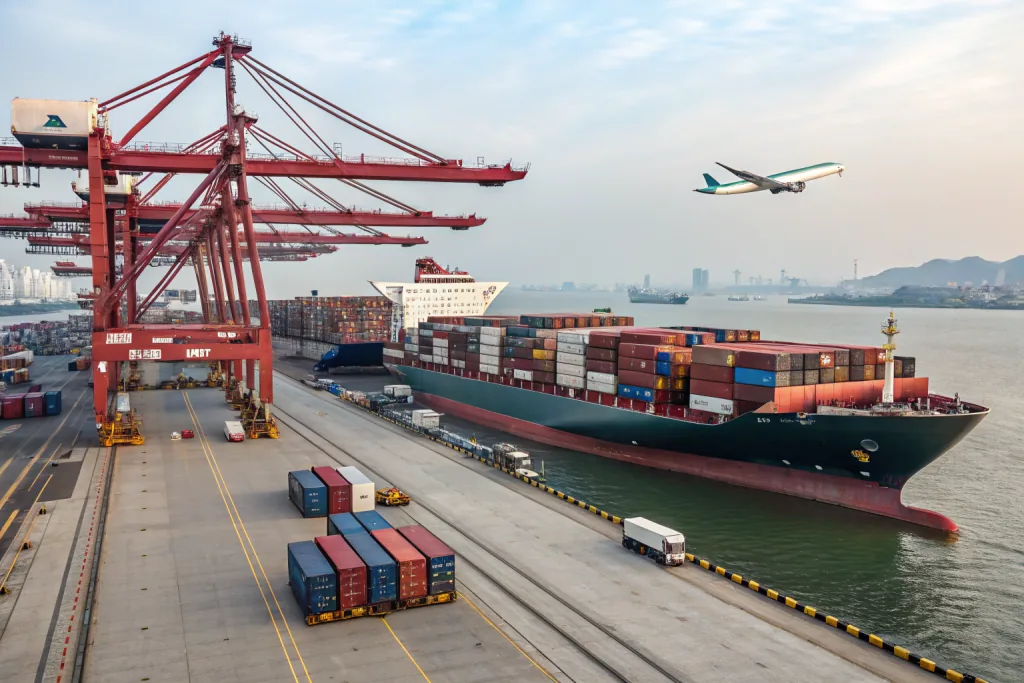
China to USA shipping typically takes 15-45 days depending on the method you choose, with sea freight averaging 20-35 days and air freight 5-10 days. However, 2026 brings new variables—from Chinese New Year shutdowns to evolving tariff policies—that can significantly impact your realistic timeline. Understanding these factors is critical for inventory planning, cash flow management, and meeting customer delivery deadlines.
A 2025 survey by the National Retail Federation found that 68% of importers underestimate China shipping times by 2-3 weeks, leading to stockouts and lost sales. This article provides the data-backed insights you need to plan accurately in 2026.
How long will it take to ship from China to the USA?
Standard sea freight from China’s major ports (Shanghai, Shenzhen, Ningbo) to US ports (Los Angeles, Long Beach, New York) takes 18-35 days under normal conditions, while expedited air freight takes 5-10 days but costs 5-8 times more. The actual timeline depends on your shipping method, port selection, customs clearance speed, and whether you’re importing full containers or consolidated shipments.
Here’s what you need to know for realistic 2026 planning:
| Shipping Method | Transit Time | Cost (per CBM*) | Best For |
|---|---|---|---|
| FCL (Full Container Load) – Sea | 20-30 days | $400-$700 | Orders 15+ CBM; cost-sensitive |
| LCL (Less Than Container Load) – Sea | 22-35 days | $800-$1,200 | Orders 5-15 CBM; small batches |
| Air Freight | 5-10 days | $3.50-$6.00 | Urgent orders; high-value goods |
| Express (DHL/FedEx/UPS) | 3-7 days | $8-$15 | Emergency restocks; samples |
*CBM = Cubic Meters. 1 CBM = 1,000 liters of space. A 20ft container = 33 CBM; 40ft container = 67 CBM
Sea Freight Timeline Breakdown
When you select sea freight, your total time includes more than just transit days:
- Factory lead time: 15-45 days (production + inspection)
- Port preparation: 2-5 days (documentation, customs broker filing)
- Sailing time: 20-30 days (Shanghai to LA/Oakland typical route)
- US port clearance: 3-7 days (customs examination, cargo release)
- Last-mile delivery: 3-10 days (from port to your warehouse)
Total realistic timeline: 45-95 days from order placement to delivery at your location. Many importers count only sailing time and are shocked when goods sit at port for a week.
Air Freight and Express Options
Air freight costs significantly more but cuts transit time roughly in half. A shipment that takes 28 days by sea might arrive in 8 days via air—but expect to pay $4.50-$6.00 per kilogram versus $0.15-$0.30 per kilogram for sea freight.
Express courier services (DHL, FedEx, UPS) are fastest but expensive. They’re practical for small, high-value shipments (electronics, samples, emergency restocks) but uneconomical for bulk inventory. A 50kg shipment might cost $800-$1,200 via express versus $150-$300 by air freight.
How long is China shut down for Chinese New Year 2026?
Chinese New Year in 2026 falls on January 29, with most factories and ports operating at reduced capacity from January 24 through February 15 (roughly 3 weeks).
This is critical: while the official holiday is 7 days (January 29-February 4, 2026), the practical shutdown extends much longer because:
- Factory closures: Most suppliers shut down 1-2 weeks before CNY and reopen 1-2 weeks after, bringing total downtime to 3-4 weeks for many facilities
- Port operations: Shanghai, Shenzhen, and other major ports operate at 40-60% capacity during this period due to staff shortages
- Customs processing: Government offices operate with skeleton crews; customs clearance is slower
- Logistics delays: Trucking and warehouse capacity tightens as companies reduce operations
2026 Chinese New Year Impact Timeline
- January 15-23: Final production push; manufacturers working overtime to fulfill pre-holiday orders
- January 24-February 4: Hard shutdown; minimal operations (order placement: don’t do it)
- February 5-15: Partial reopening; production resuming but at 60-70% capacity
- February 16+: Normal operations restored
If you need goods delivered by mid-March 2026, you must place orders by early January. Any orders placed after January 20 risk falling into the CNY backlog, potentially delaying shipment by 4-6 additional weeks.
CNY Planning Strategy for 2026
To avoid the Chinese New Year crunch, consider these approaches:
- Pre-CNY orders: Place large orders by January 15, 2026 to secure production slots before the shutdown
- Negotiated delivery dates: Agree with suppliers on delivery commitments that account for CNY delays—don’t expect normal timelines
- Safety stock: Build 2-4 weeks of extra inventory before mid-January to cover the production gap
- Delayed payment terms: Negotiate extended terms (Net 30-45) if paying before CNY production starts
- Post-CNY orders: If you miss the January window, plan for goods ordered in mid-February to arrive by late April
What External Factors Affect 2026 Shipping Times?
Beyond standard lead times and seasonal shutdowns, several market factors are reshaping China-to-USA shipping in 2026:
Tariff Environment and Customs Delays
The US trade policy landscape remains fluid entering 2026. Tariff rates on Chinese goods range from 0% (certain raw materials) to 25%+ (electronics, consumer goods) depending on product classification. Higher tariffs can trigger more intensive customs inspections, adding 2-7 days to clearance time as agents flag shipments for verification.
Anticipate that customs clearance may take 5-10 days instead of the historical 3-5 day standard.
Port Congestion Patterns
US West Coast ports (Los Angeles, Long Beach, Oakland) experience predictable congestion spikes in September-October (pre-holiday inventory buildup) and January-February (post-CNY recovery). Shipping to these ports during peak windows can add 5-10 days to dwell time.
East Coast ports (New York/Newark, Savannah) typically have shorter wait times but require additional 5-7 days of transit time compared to West Coast.
Fuel Costs and Rate Volatility
Bunker fuel prices fluctuate, affecting shipping rates. 2025 prices ranged from $480-$650 per ton. Higher fuel costs can delay sailings as lines consolidate shipments to maximize efficiency, potentially adding 3-5 days to departure windows.
How Mangors Sourcing Helps You Navigate Shipping Timelines
At Mangors Sourcing, we help US and European SMBs and e-commerce sellers manage exactly these variables. Our experienced China sourcing agents provide full-service support including:
- Supplier vetting: We identify manufacturers with realistic lead times and CNY closure policies you can trust
- Timeline negotiation: We lock in delivery commitments and build buffer time into factory schedules
- Quality control: Third-party inspections catch issues before shipment, preventing costly returns
- Shipping coordination: We arrange FCL, LCL, and air freight through vetted logistics partners
- Customs clearance: Our brokers manage documentation and expedite US port clearance
- Inventory planning: We advise on pre-CNY ordering windows and safety stock requirements
Rather than guessing at timelines and discovering delays too late, we build realistic schedules that account for Chinese New Year, port congestion, and tariff processing from day one.
Key Takeaways for 2026
- Standard China-to-USA sea freight takes 45-95 days end-to-end, not the 20-30 days many assume
- Chinese New Year 2026 (January 29 – February 15) creates a 3-4 week practical shutdown; plan accordingly
- Orders must be placed by January 15 to avoid post-CNY delays; mid-February orders won’t arrive until late April
- Air freight cuts transit to 8-10 days but costs 5-8x more; use strategically for urgent restocks
- Customs clearance and port congestion add 5-15 unpredictable days—budget for this variance
The difference between guessing and planning is inventory stockouts versus happy customers. If you’re sourcing from China in 2026, these timelines matter to your bottom line.
Ready to import from China with realistic, well-managed timelines? Contact Mangors Sourcing for a free consultation. Our sourcing experts will assess your product category, negotiate timelines with verified suppliers, and build a shipping plan that gets goods to your warehouse on time and under budget. Schedule your free discovery call today.