
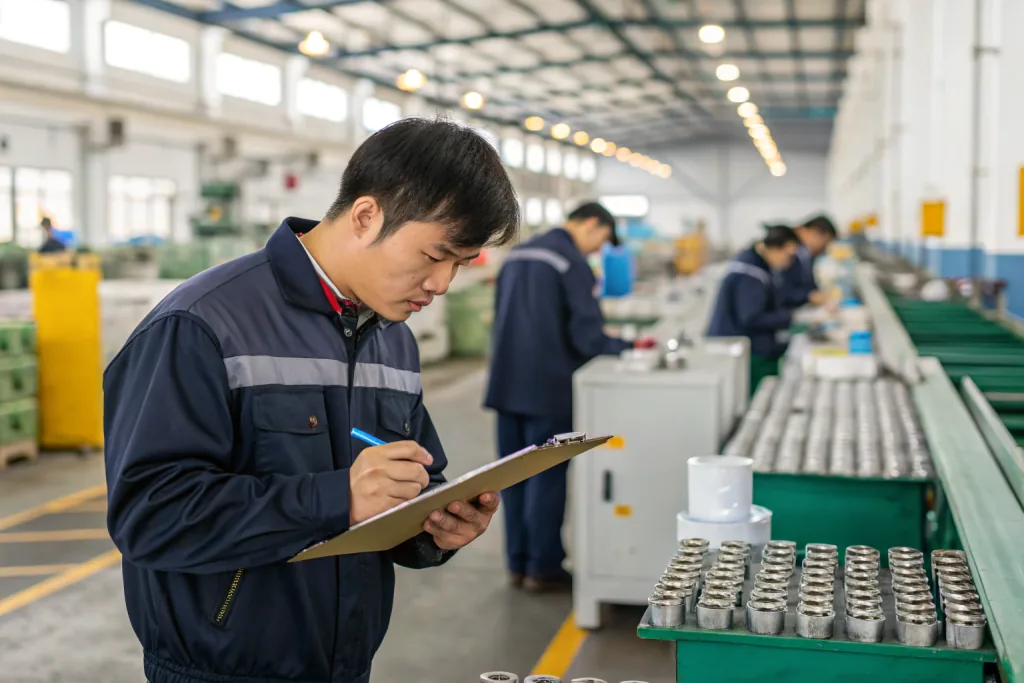
Quality control in China is critical because manufacturing standards vary dramatically across suppliers, and defects caught after shipment cost 10-50x more to fix than preventing them upfront. The best approach combines pre-production audits, in-process inspections at 30%, 60%, and 100% completion stages, and final testing before shipment—costing typically 2-5% of your product price but saving thousands in returns and disputes.
Why Quality Control Matters in China Manufacturing
Quality issues directly impact your bottom line. When you import products from China without proper QC, defect rates typically range from 5-15%, depending on supplier experience and product complexity. A single container of electronics (20,000 units) with a 10% defect rate means 2,000 unusable items—representing a loss of $10,000-$50,000 depending on product value.
Beyond financial loss, poor quality damages your brand reputation. One negative review from a customer who received a defective product can cost you an average of $500 in lost lifetime value per customer. For e-commerce sellers especially, a spike in returns triggers Amazon, eBay, or other platform penalties, reducing your visibility and sales velocity.
China’s manufacturing environment presents specific challenges:
- Supplier variation: Quality standards differ wildly between Tier-1 factories in Shenzhen and smaller workshops in inland provinces
- Communication barriers: Language gaps lead to misinterpretation of specifications
- Cost-cutting pressure: Suppliers often substitute materials or skip steps to improve their margins
- Limited accountability: Once goods leave the factory, liability becomes murky
This is where systematic quality control becomes your protection mechanism.
The Four Stages of Quality Control in China Manufacturing
Effective QC involves four distinct checkpoints: pre-production, in-process, final inspection, and third-party verification.
1. Pre-Production Quality Control (PQC)
Pre-production QC happens before manufacturing begins and prevents 70% of potential issues. This stage includes reviewing prototypes, approving material samples, and confirming specifications with your supplier.
What to check:
- Material certifications (for textiles, plastics, metals)
- Color samples matching your Pantone codes
- Packaging mockups
- Supplier’s test reports (SGS, TÜV, or equivalent third-party labs)
- Worker qualifications and training records
Cost: $500-$2,000 per PQC audit, typically done once per product order
Lead time: 5-10 days before production starts
2. In-Process Quality Control (IPC)
In-process inspections occur during manufacturing at three key checkpoints: 30%, 60%, and 100% production completion. This catches issues mid-production when they’re still cost-effective to fix.
At each checkpoint, QC inspectors randomly sample 125-200 units (using AQL 1.5 standard, the international baseline for most consumer goods). They test functionality, measure dimensions, check assembly quality, and verify packaging.
Sample sizes by production volume:
| Production Volume | Sample Size (AQL 1.5) | Acceptance Limit | Inspection Cost per Visit |
|---|---|---|---|
| 5,000 units | 125 units | 3 defects max | $300-$400 |
| 10,000 units | 200 units | 5 defects max | $400-$500 |
| 20,000 units | 315 units | 7 defects max | $500-$650 |
| 50,000+ units | 500 units | 10 defects max | $650-$800 |
Total IPC cost: $1,200-$2,400 (three visits × $400-$800) per order
Red flags to catch during IPC:
- Color deviation exceeding ΔE 1.0 from approved sample
- Dimension tolerance outside ±0.5mm for precise components
- Loose stitching, weak seams, or assembly gaps
- Missing components or accessories
- Labels, barcodes, or printing errors
3. Final Inspection Before Shipment (FQC)
Final quality control happens 48-72 hours before container loading. Inspectors conduct a comprehensive 100% check of randomly selected boxes (typically 100-150 units from a 20,000-unit shipment) to verify the entire batch meets standards.
FQC checklist:
- Physical product functionality (power on, buttons work, mechanisms operate)
- Packaging integrity (no crushing, no liquid leaks, proper sealing)
- Documentation accuracy (packing lists, shipping marks, certifications)
- Compliance testing results attached (CE, FCC, RoHS certificates as applicable)
- Labeling correctness (UPC codes, warning labels, country of origin)
FQC cost: $800-$1,500 depending on product complexity
Lead time: 2-3 days before shipment
4. Third-Party Lab Testing
For products requiring compliance certification (electronics, textiles, toys, cosmetics), third-party lab testing is non-negotiable. Common certifications include:
- Electronics: CE mark, FCC (USA), RoHS, REACH
- Toys: ASTM F963 (USA), EN 71 (EU)
- Textiles: Azo dyes testing, formaldehyde limits
- Cosmetics: Heavy metals, microbiological testing
Third-party lab costs:
- Basic testing (color fastness, seam strength): $200-$500
- Electronics compliance (CE/FCC): $1,500-$5,000
- Toy safety testing: $2,000-$4,000
- Chemical testing (textiles/cosmetics): $800-$2,500
Reputable labs include SGS, TÜV, Intertek, and Bureau Veritas, all with offices throughout China.
Real-World Quality Control Costs Breakdown
Let’s use a practical example: importing 10,000 units of a private-label electronic gadget from Shenzhen.
| QC Stage | Cost | When |
|---|---|---|
| Pre-Production Audit | $1,000 | Week 1 |
| IPC Visit 1 (30%) | $450 | Week 2 |
| IPC Visit 2 (60%) | $450 | Week 3 |
| FCC Compliance Testing | $3,500 | Week 3 |
| IPC Visit 3 (100%) | $500 | Week 4 |
| Final Inspection | $1,200 | Week 4 |
| Total QC Investment | $7,100 | 4 weeks |
If your product costs $8 per unit to manufacture and you’re importing 10,000 units, your landed cost before QC is $80,000. Adding $7,100 in QC represents 8.9% of your total product cost—but it prevents a potential $20,000+ loss from a 10% defect rate requiring replacement.
How to Implement QC: Step-by-Step Process
Step 1: Create detailed Quality Control specifications before sending your order to the supplier. Include dimensional drawings, material standards, color codes (RGB and Pantone), functionality requirements, and packaging specifications. The more detailed, the less room for interpretation.
Step 2: Select a QC partner or in-house QC team. You have three options:
- In-house QC: Requires hiring inspectors in-country (cost: $2,000-$4,000/month per inspector, minimum 3-month commitment)
- Local QC companies: Companies like Qlooq or CTS hire and manage inspectors; cost $500-$1,000 per inspection visit
- Full-service sourcing agents: Companies like Mangors Sourcing integrate QC into their complete service (supplier vetting, quality control, shipping, and customs), typically costing 3-6% of FOB value
Step 3: Establish inspection schedules aligned with production timelines. Communicate these dates to your supplier in writing and ensure they understand consequences of failing inspection (halt of production, rework requirements, etc.).
Step 4: Document everything. Maintain inspection reports, test results, and photo evidence. This protects you in disputes and helps identify recurring issues with suppliers.
Step 5: Set acceptable defect limits (AQL). The standard is AQL 1.5 (1.5% acceptable quality limit), meaning you’ll accept a shipment with up to 1.5% defective units. For higher-value items or critical safety components, negotiate AQL 0.65 or even AQL 0.25.
Common Quality Issues in China and How to Prevent Them
Issue 1: Color variation
Causes: Different dye batches, lighting differences, material sourcing changes
Prevention: Approve Pantone-matched color samples in writing before production; specify ΔE tolerance (typically ±0.5 acceptable)
Issue 2: Dimension tolerance drift
Causes: Worn machinery, untrained workers, inadequate measurement tools
Prevention: Require supplier calibration certificates for measurement equipment; conduct dimensional audits at 60% production
Issue 3: Packaging damage
Causes: Low-quality materials, rough handling, insufficient cushioning
Prevention: Approve packaging materials in PQC; conduct drop tests on samples; specify “Handle with Care” markings on shipping boxes
Issue 4: Missing components or accessories
Causes: Assembly line errors, miscounting, inventory confusion
Prevention: Require kitting verification at 30% IPC; use photo documentation during packing process
QC for Different Product Categories
Quality requirements vary significantly by product type. Here’s what to prioritize:
- Electronics: Functionality testing, voltage safety, electromagnetic compatibility (EMC), packaging integrity. Budget: $5,000-$10,000 per order
- Textiles/Apparel: Color fastness, seam strength, dimension accuracy, label accuracy. Budget: $2,000-$4,000 per order
- Home goods/furniture: Assembly integrity, finish quality, dimension verification, stability testing. Budget: $2,000-$5,000 per order
- Food/supplements: Packaging sealing, labeling accuracy, certificate of analysis for ingredients, allergen testing. Budget: $3,000-$8,000 per order
- Toys/children’s products: Safety testing (mandatory), choking hazard assessment, lead/toxin testing, durability testing. Budget: $4,000-$10,000 per order
Red Flags: When to Walk Away from a Supplier
Even with QC in place, some suppliers are problematic. Warning signs include:
- Defect rate consistently above 5% after first three shipments
- Refusal to allow third-party inspections
- Unwillingness to provide sample testing reports
- Communication delays exceeding 24 hours
- Evasiveness about material sourcing or certifications
- History of disputes with previous customers (verify via trade forums)
Switching suppliers costs 4-8 weeks and $2,000-$5,000 in new tooling and samples, but it’s cheaper than managing chronic quality problems.
The Mangors Sourcing Advantage
For small and medium-sized businesses importing from China, managing quality control independently is time-consuming and risky. Experienced China sourcing agents like Mangors Sourcing handle the entire process: supplier vetting, quality control audits, in-process inspections, compliance testing, and final verification—then manage shipping and customs.
Working with a full-service partner means you’re not juggling inspection schedules, interpreting test reports, or negotiating rework with suppliers. Your sourcing agent serves as your on-ground quality advocate, catching issues before they become expensive problems.
Final Checklist: Your QC Action Plan
- Create detailed product specifications and quality standards document
- Include QC clauses in your manufacturing agreement (inspection rights, acceptance criteria, rework procedures)
- Schedule pre-production audit before any manufacturing begins
- Plan three in-process inspections at 30%, 60%, and 100% completion
- Arrange third-party compliance testing (CE, FCC, ASTM, etc., as required)
- Conduct final inspection 48-72 hours before container loading
- Maintain documentation and photos for every inspection
- Review defect reports with supplier to identify improvement areas
Quality control isn’t optional when importing from China—it’s the difference between healthy margins and financial disaster. The 3-8% investment in systematic QC pays for itself many times over by preventing costly defects, protecting your reputation, and ensuring customer satisfaction.
Ready to protect your supply chain? Contact Mangors Sourcing today for a free consultation on implementing quality control for your China imports. Our team will assess your specific product requirements, recommend inspection protocols, and connect you with verified suppliers and testing partners.