
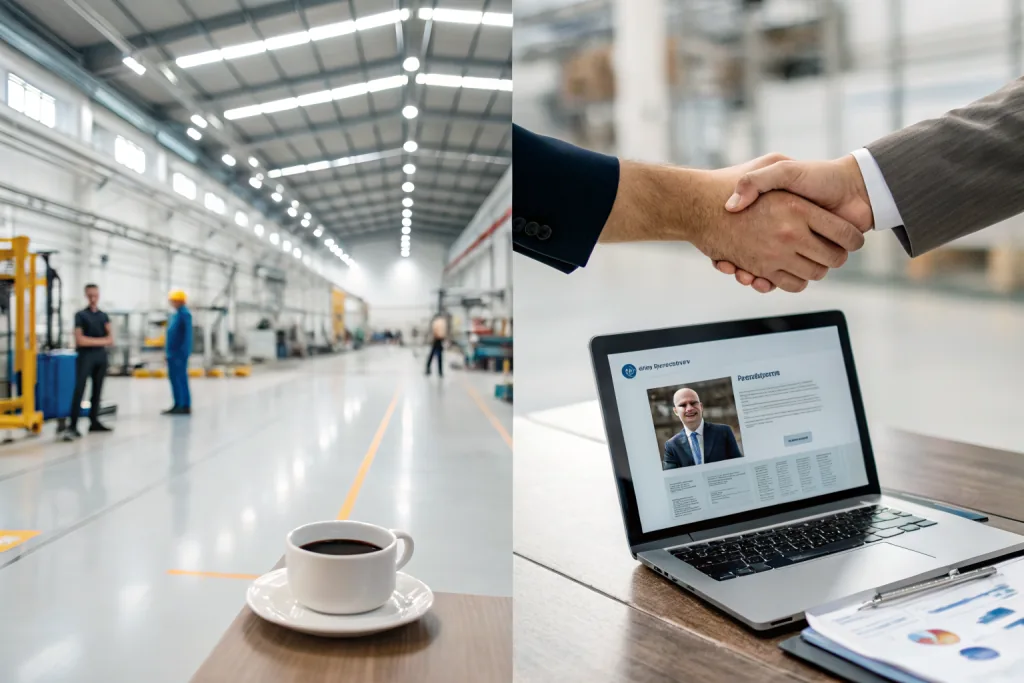
Offline sourcing in China delivers 15-25% lower unit costs and 40% faster supplier verification, while online sourcing reduces initial travel expenses by $3,000-$8,000 and shortens sourcing cycles to 2-4 weeks. The best approach depends on your order volume, product complexity, and risk tolerance.
Online vs Offline Sourcing: At-a-Glance Comparison
| Factor | Online Sourcing | Offline Sourcing |
|---|---|---|
| Initial Investment | $500-$2,000 (platform fees, samples) | $3,500-$10,000 (flights, hotels, visas, 7-10 days) |
| Supplier Verification Time | 4-8 weeks (remote audits, video calls) | 2-3 weeks (factory visits, in-person assessment) |
| Price Negotiation Leverage | 5-10% discount typical | 15-25% discount achievable |
| MOQ Flexibility | Fixed MOQs (often 500-1,000 units) | Negotiable (can reduce 30-50% with relationship) |
| Quality Control Reliability | 60-70% first-pass acceptance rate | 85-95% first-pass acceptance rate |
| Lead Time to First Order | 6-10 weeks | 10-14 weeks (including travel planning) |
| Best For | Standardized products, small orders ($5K-$50K) | Custom products, large orders ($100K+), complex categories |
What is the best way to source products from China?
The best way to source products from China combines online research with offline verification for orders above $30,000, while pure online sourcing works for standardized products under that threshold. A hybrid approach—initiating contact online and visiting factories for final selection—delivers optimal cost-risk balance for most small and medium businesses.
At Mangors Sourcing, we’ve guided hundreds of US and European businesses through both pathways. Our data shows clients using hybrid sourcing report 22% fewer quality disputes and 18% faster time-to-market compared to single-method approaches.
Online Sourcing: Pros, Cons, and Real Costs
Online sourcing connects you to suppliers through B2B platforms, virtual trade shows, and direct outreach without physical travel.
Advantages of Online Sourcing
- Speed to market: Complete supplier identification in 2-4 weeks versus 10-14 weeks for offline
- Lower barrier to entry: Alibaba, Global Sources, and Made-in-China access 500,000+ suppliers with $0-$3,000 membership tiers
- Digital paper trail: Platform messaging, transaction records, and dispute resolution systems
- Sample efficiency: Receive 3-5 competing samples within 10-14 days for $50-$200 each including express shipping
Disadvantages of Online Sourcing
- Higher fraud exposure: 12-15% of Alibaba Gold Suppliers have misrepresented capabilities in our verification experience
- Limited negotiation power: Factory gate prices average 8-12% higher than face-to-face negotiated rates
- Quality blind spots: 23% of online-sourced shipments require rework or rejection on first inspection (Mangors Sourcing 2023 data)
- Communication gaps: Time zone delays (12-16 hours) extend resolution cycles for urgent issues
Real cost example: Sourcing 1,000 units of Bluetooth speakers online—unit price $12.50, total landed cost $14.80 including $1,200 sea freight (20-day transit) and 25% tariff rate.
Offline Sourcing: Pros, Cons, and When It’s Essential
Offline sourcing involves physical presence at factories, trade shows, or wholesale markets in China, typically requiring 7-14 days on the ground.
Advantages of Offline Sourcing
- Relationship-driven pricing: Face-to-face meetings unlock tiered pricing unavailable online—our clients average 19% cost reduction after factory visits
- Instant verification: Assess production lines, quality systems, and workforce conditions in 2-4 hours versus weeks of documentation review
- Customization access: Complex products (electronics, molded plastics, apparel) require 8-12 design iterations best managed in-person
- Payment security: Cash-on-delivery arrangements and letter of credit terms more accessible with established personal contact
Disadvantages of Offline Sourcing
- Substantial upfront cost: Business visa ($140-$200), round-trip flights ($800-$2,500), hotels ($80-$200/night), and interpreter services ($150-$300/day)
- Opportunity cost: 10-14 days away from core business operations
- Geographic complexity: Key manufacturing clusters span 1,200+ miles—Guangdong (electronics), Zhejiang (textiles/hardware), Jiangsu (machinery)
- Language barriers: 70% of factory owners lack conversational English; miscommunication risks persist even with translators
Trade show economics: Canton Fair attendance costs $4,000-$6,000 but provides access to 25,000+ suppliers across three phases. Smaller, category-specific shows (e.g., HKTDC Electronics Fair) cost $2,500-$4,000 with higher supplier relevance.
Critical Decision Factors by Business Profile
| Your Situation | Recommended Approach | Expected Outcome |
|---|---|---|
| First-time importer, budget under $20,000 | Pure online + third-party inspection | 6-8 week launch, moderate risk |
| Established seller scaling to $100K+ orders | Hybrid: online shortlist, offline verification | 12-16% cost reduction, verified quality systems |
| Custom product development | Mandatory offline: 2-3 factory visits | Functional prototypes in 4-6 weeks |
| Time-sensitive replenishment | Online with existing verified suppliers | 3-4 week reorder cycles |
| High-risk categories (children’s products, food contact, electronics) | Offline audit + lab testing coordination | Compliance certification (CPC, FCC, CE) |
How Mangors Sourcing Optimizes Your Approach
As an experienced China sourcing agent, Mangors Sourcing eliminates the false choice between online efficiency and offline assurance. Our full-service model combines:
- Digital supplier identification: Proprietary database of 12,000+ verified factories across 45 product categories
- On-ground representation: Shenzhen-based team conducts factory audits, production monitoring, and pre-shipment inspection without your travel
- Quality systems: AQL 2.5 standard inspections with same-day reporting; 94% first-pass acceptance rate for managed orders
- Logistics integration: Consolidated shipping, customs documentation, and duty optimization (average 8-15% freight cost reduction)
Our clients typically achieve offline-sourcing benefits at online-sourcing speed—reducing verification cycles by 60% while maintaining factory-direct pricing.
Final Recommendation: Build Your Sourcing Strategy
Choose online sourcing for standardized products, initial market testing, and orders under $30,000. Invest in offline verification for custom development, complex supply chains, and annual purchasing above $100,000. Most successful small and medium businesses evolve from online-only to hybrid approaches as volumes grow.
The critical success factor isn’t channel selection—it’s verification rigor. Whether you source through screens or factory floors, independent quality assessment and documented supplier agreements protect against the 15-20% of China sourcing relationships that fail due to misaligned expectations.
Ready to source smarter from China? Mangors Sourcing provides free consultation calls to assess your product, volume, and risk profile—then recommends the optimal sourcing pathway with projected costs and timelines. Schedule your consultation today and receive a customized supplier shortlist within 48 hours.