
Quick Answer: To clear customs after importing from Alibaba, ensure you have all the necessary documentation (invoice, packing list, Bill of Lading, etc.), understand your import regulations and Incoterms1, and consider engaging a customs broker2 or freight forwarder. This guide walks you through each step to guarantee a smooth clearance process.
In international trade, clearing customs is a critical step that can make or break your supply chain efficiency. For businesses importing from Alibaba, navigating customs procedures can be a challenge if you are not familiar with the documentation, regulations, and potential pitfalls. In this guide, we will detail a clear, actionable process to help you clear customs without unnecessary delays or added expenses.
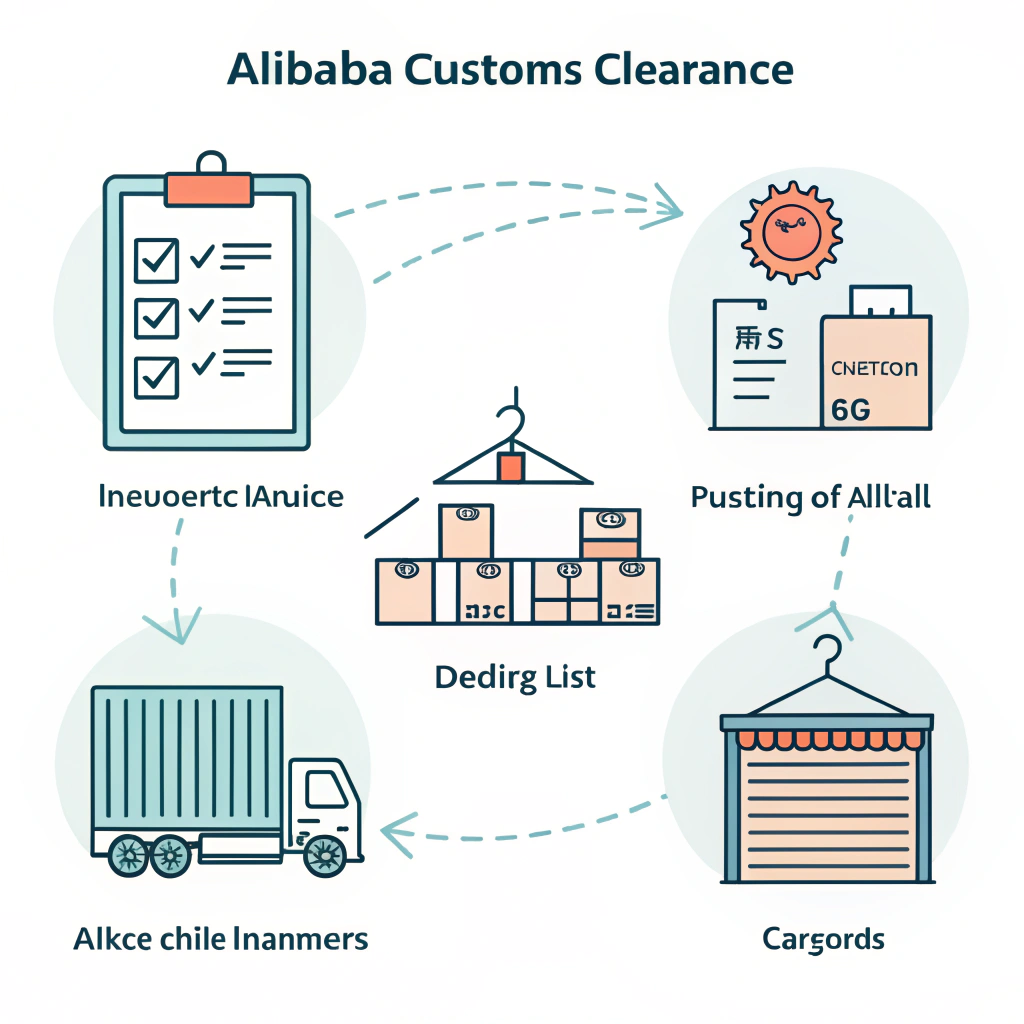
At its core, customs clearance is the process by which your imported goods are inspected, documented, and approved by national customs authorities. Every country has its own rules regarding import regulations, duty, and tariffs which means that the specifics can vary greatly depending on where your goods are entering.
Ensuring that you have the correct documents in place is essential. Some of the most common documents include:
- Signed Invoice: This confirms the value of the goods.
- Packing List: A detailed account of the items included in the shipment.
- Bill of Lading or Airway Bill: Acts as a contract between the shipper and the carrier.
- Customs Declaration Forms (GATT or similar): Accurately filled declaration forms are crucial for compliance.
- Importers/Custom House Agent’s (CHA’s) Declaration: Validates the contents of your shipment.
- Licenses (if needed): Some products may require special permits.
- Payment Documents (Letter of Credit/Bank Draft): As proof of transaction.
- Insurance Documents: To cover any potential losses during transit.
Having these documents prepared in advance can minimize delays at customs. A comprehensive checklist presented in the table below can guide your document preparation.
| Document | Purpose | Notes |
|---|---|---|
| Signed Invoice | Confirms product value | Should match declared value |
| Packing List | Details content of shipment | Must correspond to shipment contents |
| Bill of Lading / Airway Bill | Transportation contract | Essential for international shipments |
| Customs Declaration Form | Entry declaration | Fill accurately to prevent delays |
| CHA’s Declaration | Confirms contents and compliance | Provided by the customs broker if needed |
| Licensing Documents | Compliance for regulated items | Check if specific products require licenses |
| Payment Proof | Confirms payment and transaction | Usually required by customs |
| Insurance Documentation | Coverage of shipment risks | Advisable for high-value goods |
Clearing customs for goods imported from Alibaba involves several key steps. Here’s a detailed look at the process:
Before your goods leave your supplier, it is essential to confirm that all necessary documents are ready:
- Confirm the invoice and packing list provided by your supplier. Ensure these documents are correct and match the shipment details.
- Coordinate with your freight forwarder about which Incoterms1 are in use. For instance, under Delivered Duty Paid (DDP)3, the seller may handle customs clearance, meaning duties and fees are prepaid. However, if your shipment does not fall under DDP, you must manage these steps yourself.
Customs brokers specialize in managing the complexities of import regulations. Consider hiring a reputed broker who can:
- Verify that all your documentation complies with local regulations.
- Facilitate liaison between your business and the customs authorities.
- Help you understand and calculate applicable duties and tariffs4.
Working with a seasoned broker can eliminate much of the guesswork and significantly reduce the risk of delays.
Incoterms1 clarify the responsibilities of buyers and sellers regarding the shipment costs, insurance, and subsequent clearance processes. The primary terms to be aware of are:
- Delivered Duty Paid (DDP)3: The seller is responsible for all steps until the goods are cleared, including paying duties and taxes.
- Ex Works (EXW)5: The buyer assumes full responsibility for collecting and clearing the goods at customs.
Understanding these terms is critical because they define who manages customs clearance procedures and who incurs the associated costs.
Once your goods arrive, submit the compiled documentation to customs. Here’s what typically happens during the submission:
- Customs officers will review the signed invoice, packing list, Bill of Lading, and declaration forms.
- Any discrepancies or errors can lead to delays and potential fines. Therefore, double-check document accuracy before submission.
- In some cases, further information might be requested by the customs authorities.
After reviewing your documents, customs officials will assess any duties and tariffs4 applicable to your shipment. It is crucial to:
- Get an estimate of these costs ahead of time from your customs broker.
- Ensure you have sufficient funds readily available to cover these fees.
- Implement a clear payment process, either directly or via your broker.
Customs inspections are a standard procedure to verify that the shipment complies with local laws. During this process:
- Customs agents may physically inspect the shipment to ensure that the contents match the documentation.
- This inspection helps prevent smuggling and the entry of prohibited items.
Once the inspection is satisfactorily completed, customs will clear the goods, allowing them to be either delivered to your warehouse or further distributed as per your delivery plan.
After your goods have cleared customs, it is essential to complete the following:
- Retain copies of all customs documents for future audits or in case of disputes.
- Monitor any post-clearance inspections or additional documentation requests from local authorities.
- Use the experience to refine your internal compliance processes and reduce delays in future shipments.
Maintaining detailed records not only demonstrates compliance but can also expedite future customs processes.
To ensure smooth customs clearance, consider these best practices:
- Begin preparing your documentation as soon as your order is confirmed.
- Educate your logistics team about the specific requirements of the destination country.
- Maintain open lines of communication with your Alibaba supplier, ensuring that all export documents are accurate.
- Frequent updates from your customs broker2 or freight forwarder can alert you immediately about any issues or delays.
- Utilize digital platforms and software to track shipments and manage documentation.
- Automated systems can help ensure consistency and reduce human error during data entry.
- Import regulations and tariffs can change. Stay informed by subscribing to updates from reliable sources or consulting your customs broker routinely.
- Regularly review any changes in trade policies that might affect duty calculations or required documentation.
Consider a mid-sized company that regularly imports electronics from Alibaba. Initially, they experienced multiple delays due to incorrect documentation and unclear division of responsibilities under Incoterms1. By engaging a dedicated customs broker2 and establishing a structured pre-shipment checklist, they managed to:
- Reduce clearance delays by 30%.
- Lower unexpected tariff costs due to pre-approved payment arrangements.
- Enhance overall transparency and confidence in their supply chain operations.
This case study emphasizes that a proactive approach combined with using expert resources can significantly improve the efficiency of your customs clearance process.
Below is a quick reference table summarizing the key steps discussed:
| Step | Action | Key Benefit |
|---|---|---|
| Pre-Shipment Preparation | Confirm required documents and Incoterms | Avoid last-minute surprises |
| Engage a Customs Broker | Partner with experienced professionals | Expertise minimizes errors |
| Document Submission | Double-check and submit paperwork | Compliance and accountability |
| Duties & Tariffs Payment | Pre-calculate and prepare funds | Smooth financial transition |
| Customs Inspection | Cooperate with customs inspection | Prevents shipment delays |
| Post-Clearance Procedures | Retain records and update processes | Improves future clearance efficiency |
Clearing customs after importing from Alibaba might seem complex, but by following a structured approach you can ensure your goods move swiftly through regulatory checkpoints. Remember the importance of maintaining accurate documentation, engaging experts like customs broker2, and keeping updated on trade regulations.
Action steps:
- Review your current customs clearance procedures and identify gaps.
- Invest time in training your team on compliance and documentation.
- Develop strong relationships with reliable customs brokers and freight forwarders.
- Regularly audit and update your process to meet evolving import regulations.
Taking these steps not only reduces risks but also contributes to a more efficient, cost-effective import process. With careful planning and execution, you can minimize delays, reduce unexpected expenses, and maintain a robust supply chain.
Q1: How do I clear import customs?
A1: To clear import customs, you must prepare and present all necessary documentation, such as a signed invoice, packing list, Bill of Lading or Airway Bill, customs declaration forms, and any required licenses. Engage a trusted customs broker2 to verify compliance, and be prepared to pay any applicable duties and tariffs as determined by the regulatory authorities.
Q2: Does Alibaba clear customs?
A2: Alibaba itself does not clear customs. However, many of its door-to-door shipping services operate under Delivered Duty Paid (DDP)3 terms, where the seller includes customs clearance fees, duties, and tariffs in the shipping costs. It is essential to confirm with your freight forwarder or supplier whether this service is included in your agreement.
-
Incoterms: Click here to explore the rules and contractual obligations defined by Incoterms, clarifying responsibilities between buyers and sellers in international trade. Back to term. ↩ ↩2 ↩3 ↩4
-
customs broker: Read the article to learn how customs brokers can navigate complex import regulations, ensuring proper documentation and timely clearance for your shipments. Back to term. ↩ ↩2 ↩3 ↩4 ↩5
-
Delivered Duty Paid (DDP): Learn how DDP shifts the responsibility of customs clearance and duty payments to the seller, providing a hassle-free import experience. Back to term. ↩ ↩2 ↩3
-
duties and tariffs: Understand how duties and tariffs are calculated and applied, along with strategies to manage these costs efficiently during the import process. Back to term. ↩ ↩2
-
Ex Works (EXW): Discover the implications of EXW, where the buyer takes full responsibility for collecting and clearing goods, and how it impacts your logistics strategy. Back to term. ↩