
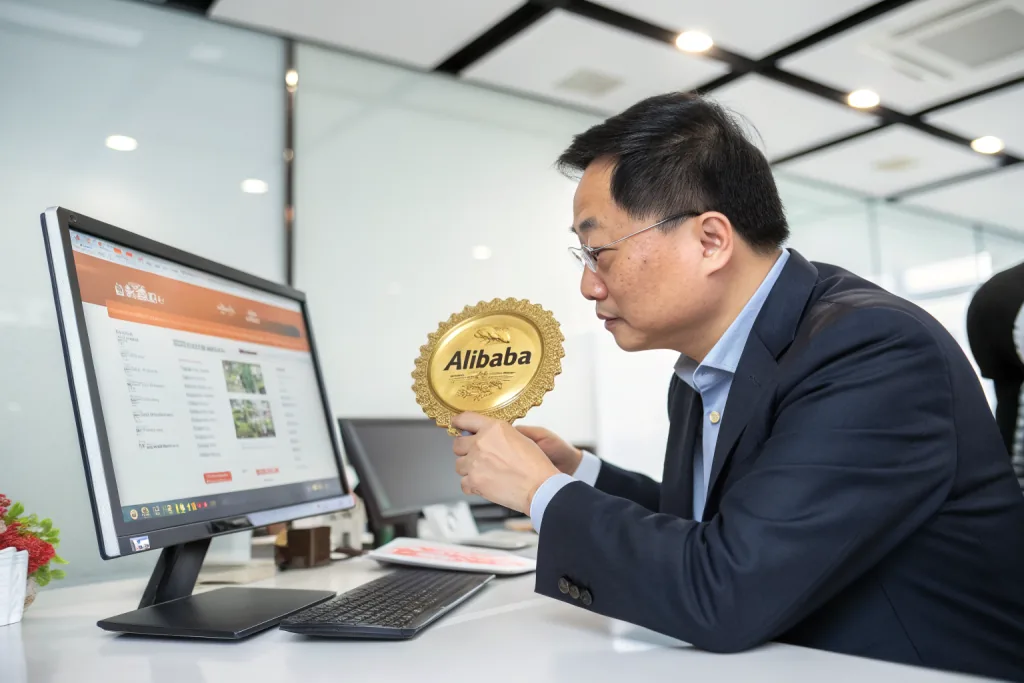
The “Gold Supplier” badge on Alibaba is primarily a paid membership tier that indicates a supplier has purchased premium services from Alibaba, not necessarily proof of quality, reliability, or trustworthiness. While it shows some level of business commitment through financial investment ($3,000-$5,000+ annually), it should be treated as just one factor among many when vetting potential Chinese suppliers, requiring independent verification through factory audits, sample orders, and third-party quality inspections.
For businesses sourcing products from China, understanding what supplier badges actually signify can save thousands of dollars and prevent costly mistakes. This guide breaks down the reality behind Alibaba’s verification systems and what you really need to know before placing orders.
What is the gold supplier on Alibaba?
Gold Supplier is a paid premium membership program on Alibaba that costs suppliers between $3,000 and $5,000+ per year, granting them enhanced profile visibility, priority placement in search results, and access to additional marketing tools. The badge does not indicate that Alibaba has verified the supplier’s manufacturing capabilities, product quality, or business ethics—it simply confirms they’ve paid for premium services and submitted basic business registration documents.
The Gold Supplier membership includes several features that benefit the supplier more than the buyer:
- Higher ranking in Alibaba search results
- Ability to showcase more products (typically 30-50 products versus 10 for free members)
- Trust badges displayed on their storefront
- Basic company verification (business license check only)
- Access to premium analytics and buyer inquiry tools
- Priority customer support from Alibaba
According to data from sourcing professionals, approximately 40-45% of suppliers listed on Alibaba.com hold Gold Supplier status. This high percentage demonstrates that the badge is relatively common and should not be considered an exclusive mark of distinction. Many legitimate manufacturers maintain Gold Supplier status simply because the marketing advantages justify the annual cost, while some trading companies use it to appear more credible than they actually are.
The verification process for Gold Supplier status includes only a basic business license check—Alibaba does not inspect factories, test products, or verify manufacturing capabilities. This means a trading company operating from a small office can obtain the same Gold Supplier badge as a legitimate factory with 500 employees and advanced production lines.
Can suppliers on Alibaba be trusted?
Alibaba suppliers range from highly reputable manufacturers to unreliable trading companies and occasional scammers, requiring buyers to conduct independent verification regardless of supplier badges, with approximately 30-40% of Gold Suppliers being trading companies rather than actual factories. Trustworthiness must be established through your own due diligence, not assumed based on platform memberships.
Here’s a realistic breakdown of Alibaba supplier categories:
| Supplier Type | Estimated Percentage | Typical Characteristics | Risk Level |
|---|---|---|---|
| Legitimate Factories | 25-30% | Own production facilities, 50+ employees, export licenses | Low to Medium |
| Trading Companies | 40-50% | Source from factories, markup 15-30%, no production capacity | Medium |
| Hybrid (Factory + Trading) | 15-20% | Own some production, outsource other products | Medium |
| Unreliable/Fraudulent | 5-10% | Fake photos, no real business, deposit scams | High to Extreme |
To properly vet an Alibaba supplier, implement these essential verification steps:
1. Request a video factory tour: Ask for a live video call walking through production lines, warehouses, and quality control areas. Legitimate factories will comply within 24-48 hours. Request to see products being manufactured and packaging areas.
2. Verify business licenses independently: Don’t rely on documents posted on Alibaba. Request current business licenses and export licenses, then verify them through local Chinese business registration databases or hire a sourcing agent to check authenticity.
3. Order paid samples: Always order samples before placing bulk orders. Expect to pay $50-$300 for samples plus shipping ($30-$80 via courier). Sample quality should match or exceed your bulk order quality requirements. Be wary if suppliers offer free samples too readily—this can indicate they’re trading companies, not manufacturers.
4. Check references: Request contact information for 2-3 current clients in your region. Legitimate suppliers working with Western buyers will have verifiable references. Expect 40-60% of suppliers to provide genuine references when asked.
5. Conduct third-party inspections: For orders over $5,000, hire independent quality control companies to inspect products before shipment. Pre-shipment inspections cost $200-$400 and can save thousands in defective merchandise.
Experienced China sourcing agents like Mangors Sourcing specialize in supplier verification, conducting factory audits, checking business credentials, and evaluating manufacturing capabilities to help small and medium businesses avoid problematic suppliers and identify reliable manufacturing partners.
Is Alibaba safe to buy jewelry?
Alibaba is generally not recommended for purchasing fine jewelry or precious metals due to high rates of quality misrepresentation, material substitution, and certification fraud, though it can be suitable for fashion jewelry and costume jewelry if proper quality control measures are implemented. Approximately 60-70% of “gold” or “silver” jewelry listed on Alibaba uses plated materials rather than solid precious metals, despite product descriptions claiming otherwise.
The jewelry category presents specific challenges on Alibaba:
Material verification issues: Suppliers frequently misrepresent materials. Items listed as “925 sterling silver” often test as silver-plated brass or lower-grade alloys. “14K gold” items may be gold-plated or use significantly lower gold content. Without laboratory testing, visual inspection cannot confirm material authenticity.
Certification problems: Gemstone certificates and authenticity documentation provided by suppliers are often fabricated or from non-credible testing facilities. Legitimate gemological certifications from GIA, AGS, or IGI are rare for products sourced through Alibaba at typical price points ($2-$50 per piece).
MOQ and pricing considerations: Fashion jewelry minimum order quantities typically range from 100-500 pieces per design. Wholesale prices run $1.50-$15 per piece for costume jewelry, $8-$40 for silver-plated items, and $15-$100+ for items claimed to be sterling silver or containing genuine gemstones.
If you decide to source jewelry through Alibaba, implement these protective measures:
- Require material testing certificates: Demand test reports from your own chosen testing facility, not supplier-provided certificates. Budget $150-$400 for independent materials testing of samples.
- Order extensive samples: For jewelry, order 5-10 sample pieces across different styles to check for consistency. Total sample costs: $100-$500 plus shipping.
- Use secure payment methods: Utilize Alibaba Trade Assurance for orders under $10,000, which provides some buyer protection. For larger orders, use letters of credit or escrow services.
- Inspect every shipment: Jewelry quality can vary significantly between orders. Third-party inspection is essential for each shipment, not just the first order.
- Start with small orders: Place initial orders of 100-300 pieces maximum ($200-$1,500) to test supplier reliability before committing to larger quantities.
Import compliance for jewelry: Understand that jewelry imports face specific regulations. US imports require country-of-origin marking on each piece. Precious metal items may require hallmarking. Tariff rates for jewelry from China range from 5.5% to 13.5% depending on materials and classification. Costume jewelry typically faces 11% duties, while items containing precious metals may incur lower or higher rates based on HS code classification.
Professional sourcing agents can arrange independent materials testing, verify supplier claims about jewelry composition, and coordinate quality inspections specific to jewelry manufacturing standards—services particularly valuable for this high-risk product category.
Beyond Badges: Real Supplier Vetting Strategies
Smart sourcing professionals know that Alibaba badges—whether Gold Supplier, Assessed Supplier, or Verified Manufacturer—provide minimal actual assurance. Implement this systematic vetting approach instead:
Communication quality test: Ask detailed technical questions about manufacturing processes, materials sourcing, and quality control procedures. Legitimate manufacturers will provide specific, knowledgeable answers within 12-24 hours. Trading companies often give vague responses or longer delays while they consult actual factories.
Pricing reality check: Request quotes from 5-8 suppliers for identical specifications. Prices typically cluster within a 15-25% range. Quotes more than 30% below the average suggest quality compromises, while quotes significantly above average may indicate trading company markups. For context, trading companies typically add 15-30% margins above factory prices.
Production capacity verification: Ask about current production capacity, lead times for different order quantities, and busy/slow seasons. A factory producing 10,000 units monthly should not promise 15,000 units with a 7-day lead time. Standard production lead times range from 15-35 days for most products, plus 3-7 days for quality control and shipping preparation.
Payment terms negotiation: Legitimate factories typically accept 30% deposit and 70% before shipment. Be extremely cautious of suppliers demanding 100% payment upfront or accepting 100% payment on delivery without relationship history—both scenarios indicate potential issues.
Mangors Sourcing provides comprehensive supplier vetting services for businesses importing from China, including factory audits, background checks, production capacity assessments, and quality control management, helping small and medium businesses navigate supplier relationships with confidence and avoid costly mistakes.
The True Cost of Choosing Wrong Suppliers
Selecting unreliable suppliers based on Alibaba badges rather than proper due diligence creates significant financial and operational risks:
- Defective merchandise: 20-40% defect rates common with unvetted suppliers versus 2-5% with properly verified manufacturers
- Material substitution: Receiving cheaper alternative materials costs businesses $3,000-$15,000 average per incident in unsellable inventory
- Shipment delays: Unreliable suppliers miss promised delivery dates 50-70% of the time, causing stockouts and lost sales
- Deposit scams: Complete loss of 30% deposits ranging from $1,000-$50,000 for businesses dealing with fraudulent operations
- Intellectual property theft: Design theft and unauthorized production runs cost brands an estimated $15,000-$100,000+ in lost competitive advantage
The investment in proper supplier vetting—whether through direct efforts or partnering with experienced sourcing agents—typically costs $500-$2,500 initially but prevents losses averaging $8,000-$25,000 per problematic supplier relationship.
Ready to Source Smarter from China?
Don’t let Alibaba badges mislead your sourcing decisions. While Gold Supplier status indicates a supplier has invested in platform visibility, it provides no guarantee of manufacturing quality, business reliability, or product authenticity. Success in China sourcing requires systematic verification, quality control, and experienced guidance.
Mangors Sourcing helps small and medium businesses navigate the complexities of importing from China with full-service support including supplier vetting, factory audits, quality inspections, shipping coordination, and customs clearance. Our team verifies what badges cannot—actual manufacturing capabilities, quality standards, and supplier reliability.
Contact Mangors Sourcing today for a free consultation and discover how professional sourcing support can help you find trustworthy manufacturers, ensure product quality, and import successfully from China while avoiding the common pitfalls that cost businesses thousands in defective merchandise and failed supplier relationships.