
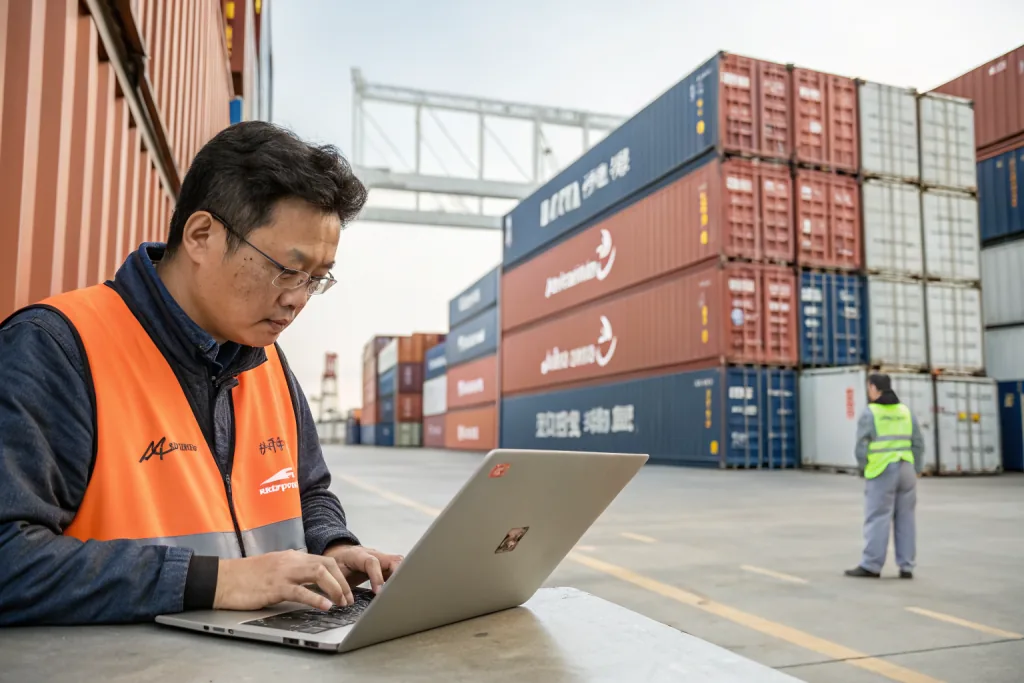
For most international buyers, Alibaba.com is the better choice because it’s designed for export with English support, trade assurance, and international logistics, while 1688.com offers lower prices but requires Chinese language skills and a local address. The right platform depends on your sourcing experience, order volume, and whether you have support from a China sourcing agent.
Both platforms are owned by Alibaba Group, but they serve completely different markets with distinct advantages. Understanding these differences can help you save 15-40% on product costs while avoiding costly mistakes in your China sourcing journey.
Platform Comparison: Key Specifications
Before diving into detailed analysis, here’s a direct comparison of the two platforms across critical factors that affect your sourcing decisions:
| Feature | Alibaba.com | 1688.com |
|---|---|---|
| Primary Market | International B2B exports | China domestic wholesale |
| Language | English and 15+ languages | Chinese only |
| Typical MOQ | 500-3,000 units | 50-500 units |
| Price Level | Baseline (100%) | 15-40% lower |
| Payment Methods | Credit card, PayPal, wire transfer, Trade Assurance | Alipay (requires Chinese bank account) |
| Shipping Address | International addresses accepted | China addresses only |
| Buyer Protection | Trade Assurance program | Limited (domestic disputes only) |
| Product Inspection Photos | Often provided upon request | Rarely provided |
Which is cheaper, 1688 or Alibaba?
1688 is significantly cheaper than Alibaba, with prices typically 15-40% lower for identical products, because it’s designed for China’s domestic wholesale market where suppliers don’t include export-related costs like international marketing, English customer service, or export documentation.
Here are real price comparisons across popular product categories:
- Silicone phone cases: Alibaba $0.85-$1.20 per unit (MOQ 1,000) vs. 1688 $0.45-$0.75 per unit (MOQ 100)
- Stainless steel water bottles: Alibaba $3.50-$5.20 per unit (MOQ 500) vs. 1688 $2.10-$3.80 per unit (MOQ 50)
- Yoga mats: Alibaba $4.80-$7.50 per unit (MOQ 500) vs. 1688 $2.90-$4.50 per unit (MOQ 100)
- Bluetooth earbuds: Alibaba $8.50-$12.00 per unit (MOQ 1,000) vs. 1688 $5.20-$7.80 per unit (MOQ 200)
The price difference exists because Alibaba suppliers factor in additional costs including English-speaking staff, international payment processing fees (typically 3-5%), Trade Assurance fees, export documentation, and profit margins for dealing with international complexity. Suppliers on 1688 operate with lower overhead since they primarily serve domestic Chinese buyers who understand local business practices.
However, these lower prices on 1688 come with hidden costs. You’ll need to arrange your own freight forwarding from China (typically $4-$8 per kg for air freight or $150-$400 per cubic meter for sea freight), handle export documentation, and potentially hire a translator or sourcing agent. For orders under $3,000, these additional costs often eliminate the price advantage.
Can Americans buy from 1688?
Yes, Americans can buy from 1688, but you’ll need either a China-based freight forwarder address for delivery and a payment method like Alipay, or work with a China sourcing agent who handles the entire transaction on your behalf. The platform doesn’t directly support international shipping addresses or Western payment methods like credit cards or PayPal.
There are three practical approaches for American buyers to purchase from 1688:
Method 1: Use a Freight Forwarder Warehouse
Many freight forwarding companies in Guangzhou, Shenzhen, or Yiwu offer warehouse addresses where you can receive 1688 orders. You’ll need to create an Alipay account (which requires significant verification including Chinese ID or business registration) and arrange consolidation shipping to the US. Shipping costs typically range from $5.50-$7.50 per kg for air freight with 7-12 day delivery, or $180-$350 per cubic meter for sea freight with 25-35 day transit times.
Method 2: Partner with a China Sourcing Agent
Professional sourcing agents like Mangors Sourcing handle the complete 1688 purchasing process including supplier communication in Chinese, payment processing, quality inspection, and international shipping coordination. Service fees typically range from 5-8% of order value, but agents can negotiate better prices and catch quality issues before shipment, often saving more than their fee costs.
Method 3: Use Third-Party Buying Services
Several platforms like Superbuy or Basetao act as intermediaries, purchasing products from 1688 on your behalf. They charge service fees of 5-10% plus actual product and shipping costs. This option works for smaller test orders but becomes expensive for regular sourcing.
Alibaba.com: Pros and Cons for International Buyers
Alibaba.com remains the most popular platform for American and European importers for good reasons, but it’s not perfect for every situation.
Advantages of Alibaba.com
- Full English interface: Product descriptions, supplier communication, and customer service all function in English, eliminating language barriers that cause misunderstandings
- Trade Assurance protection: Orders up to $150,000 are protected against quality issues or shipping delays, with dispute resolution support from Alibaba
- Verified suppliers: Gold Supplier and Assessed Supplier badges indicate companies that have undergone factory audits and business verification
- International payment options: Accept credit cards, PayPal, and wire transfers without needing Chinese banking relationships
- Direct international shipping: Suppliers arrange export documentation, customs clearance support, and delivery to your US or European address
- Product customization communication: Easier to discuss custom packaging, branding, or product modifications in English with detailed specifications
Disadvantages of Alibaba.com
- Higher prices: 15-40% markup compared to 1688 for the same manufacturers
- Higher MOQs: Most suppliers require 500-3,000 unit minimum orders, making it difficult to test products or serve niche markets
- Middlemen presence: Many Alibaba suppliers are trading companies, not factories, adding another markup layer (typically 10-25%)
- Less product variety: Only 2-3 million active suppliers compared to 1688’s 8+ million, meaning fewer niche product options
- Slower response times: International-facing sales teams often handle multiple languages and time zones, resulting in 12-24 hour response delays
1688.com: Pros and Cons for International Buyers
1688 offers access to China’s vast domestic wholesale market, but navigating it successfully requires preparation and often professional assistance.
Advantages of 1688.com
- Significantly lower prices: 15-40% savings compared to Alibaba because you’re accessing factory-direct domestic pricing
- Much lower MOQs: Many suppliers accept orders of 50-200 units, perfect for product testing or small e-commerce businesses
- Direct factory access: Higher percentage of actual manufacturers rather than trading companies
- Massive product selection: Over 8 million suppliers offering products not available on international platforms
- Faster sampling: Domestic shipping within China takes 1-3 days, allowing quick sample collection when using a local agent
- Real-time inventory: Suppliers update stock levels daily for quick-turn orders
Disadvantages of 1688.com
- Chinese language only: Product descriptions, supplier chat, and all documentation require fluent Chinese or translation tools
- No international shipping: Must arrange your own freight forwarding and export procedures
- Payment limitations: Requires Alipay account with Chinese bank verification, no Western payment methods accepted
- No buyer protection for international orders: Dispute resolution only covers domestic Chinese transactions
- Complex export compliance: You’re responsible for ensuring products meet US/EU regulations, obtain proper certifications, and handle customs documentation
- Communication challenges: Suppliers expect Chinese business customs; direct negotiation styles common in Western business can cause misunderstandings
Which Platform Should You Choose?
Your decision should be based on your specific business situation, sourcing experience, and order characteristics. Here’s a practical decision framework:
Choose Alibaba.com if you:
- Are new to importing from China with limited sourcing experience
- Need order volumes of 1,000+ units where the 15-40% price difference becomes significant
- Want simplified logistics with suppliers handling export documentation
- Require English-language support for complex product customization
- Value payment protection and dispute resolution mechanisms
- Don’t have relationships with China-based freight forwarders or sourcing agents
Choose 1688.com if you:
- Work with a reliable China sourcing agent who handles communication and logistics
- Need smaller test orders (50-500 units) to validate products before scaling
- Source products frequently where 20-30% savings justify agent fees
- Want access to niche products unavailable on Alibaba
- Have established relationships with freight forwarders in China
- Are comfortable with more hands-on sourcing processes
Hybrid Approach for Maximum Value
Many experienced importers use both platforms strategically. They source initial samples and small test orders from 1688 (typically 50-200 units at $800-$3,000 per order) to validate product-market fit, then transition to Alibaba for larger production runs once demand is confirmed. This approach minimizes upfront investment risk while maintaining good pricing on volume orders.
Working with an experienced China sourcing agent like Mangors Sourcing enables this hybrid strategy effectively. Professional agents have established supplier networks on both platforms, can negotiate better pricing due to relationship leverage and volume, conduct factory audits to verify capabilities, perform pre-shipment quality inspections, and handle all logistics coordination from factory to your warehouse.
Making Your China Sourcing Decision
Both Alibaba and 1688 provide legitimate pathways to sourcing quality products from China, but success depends on matching the platform to your business needs. For most first-time importers handling their own sourcing, Alibaba offers the safety, simplicity, and support needed to avoid costly mistakes. For businesses ready to optimize costs through professional support, 1688 provides significant savings and flexibility.
The most critical factor isn’t which platform you choose, but having proper support throughout the sourcing process. Supplier verification, quality control inspections, shipping coordination, and customs compliance all require specialized knowledge that takes years to develop independently.
Ready to source products from China with confidence? Mangors Sourcing is an experienced China sourcing agent helping small and medium businesses import from China with full-service support including supplier vetting on both Alibaba and 1688, quality control inspections, competitive shipping rates, and customs clearance assistance. Contact us today for a free consultation to discuss your sourcing needs and discover how we can help you access the best pricing while minimizing risks.